Hey everyone, let’s cut right to the chase—if you work in any industry that deals with stockpiles, you’ve probably stared at clouds of dust drifting off piles of sand, gravel, coal, or whatever you store, right? I’m gonna answer a question I get literally every single week: Can dust control fences actually be used around stockpiles? Spoiler alert—yes, but only if you use ’em right. And since I’m the guy who sells these fences, I’ve tested way too many setups (and fixed way too many botched ones) to tell you the real story, not the sales fluff you’ll find on Google. Dust Control Fence

First, let’s get one thing straight: stockpile dust isn’t just annoying. It’s a pain in so many ways—you’re breaking environmental rules (we all know OSHA and EPA are breathing down necks lately), your workers are coughing up dust all shift, and you’re losing product. That fine, 10-micron dust? It’s the stuff that flies miles, gets on nearby cars, residential windows, even crops. A lot of folks default to sprinklers or covering stockpiles with tarps, but sprinklers waste like 80% of the water (evaporation, runoff, wind gusts) and tarps are a hassle to put on and take off constantly—especially if you’re moving stock around a lot. That’s where dust control fences come in, but here’s the thing: not all fences are equal, and not all stockpiles are the same, so one size does NOT fit all.
Let’s get into the science real quick—no boring textbook stuff, promise. Dust control works by slowing wind down, right? When wind hits a fence, it can’t just blast straight through and carry dust particles with it. A good fence will create a zone of calm air both right next to the fence and behind it, which is where your stockpile is (or should be). The magic number here is porosity—how much air flows through the fence, not around it. If your fence is too solid, like a concrete wall, wind will go over the top and create a vortex behind it that actually picks up more dust. Too porous, like a flimsy privacy fence, and wind just blows straight through, no slowdown, no calm zone. The sweet spot? Between 30% and 50% porosity. I’ve seen cheap imported fences that hit 70%—useless. Ones that are solid plastic mesh with no give? Also useless. We sell our fences at that exact sweet spot, and I’ve tested ’em against wind tunnels and real-world stockpiles—they cut wind speed by 50-70% behind them, depending on how tall you build ’em.
Now, when does this work for stockpiles? Let’s break it down by stockpile type, because that’s the big mistake people make—they buy a fence and then use it wrong, then say it doesn’t work. First, coal stockpiles. Super dusty, fine particles that blow like crazy. For coal, we usually recommend building the fence around the entire perimeter of the stockpile, not just a side. Wait, why? Because wind direction isn’t constant—one day it’s north, next day south, and if you only fence the north side, you’re leaving the south side wide open. Also, build the fence at least twice the height of the stockpile. If your coal pile is 20 feet tall, your fence needs to be 40 feet tall. Simple rule I learned from a mine engineer in Wyoming—never go lower than twice the stockpile height. That stops the wind from going over the top. I once had a client who built a 15-foot fence around a 20-foot coal pile, and within a month, they were back calling because dust was still drifting. Turned out he followed a random blog that said “fence height same as pile” and that’s garbage.
Next, aggregate stockpiles—sand, gravel, crushed stone. A lot less fine dust than coal, but when it’s dry, that silt and small sand grains still blow around, especially during loading/unloading. For these, you don’t need to fence the whole perimeter. Just fence the upwind side of the stockpile and the loading/unloading zones. Wait, why? Because aggregate stockpiles are bigger, and you don’t wanna drop $10k on a full fence when you only need to block the wind that’s hitting the most dusty parts. Also, shorter fences—1.5 times the pile height works here, because the dust particles are heavier, so they don’t blow as far. I had a concrete company in Texas use this trick last year—they had a 10-foot sand pile, so they put a 15-foot fence upwind, and their dust complaints dropped by 90%. Said they even stopped wasting water on sprinklers now, which saved them like $1,200 a month on water bills. That’s the kind of win I love to hear.
Wait, but what about wet stockpiles? Like, stockpiles of compost, or wood chips that are a little damp? Do fences work there? Less so, but not zero. Damp stockpiles have less dust anyway, but if you’re in a super windy area, fences can still block wind that would dry out the top layer too fast, which is good for keeping the moisture in (so less dust) and for product quality. I had a compost facility in Ohio that had a problem with their top layer of compost drying out and blowing away, and putting a fence around it cut their waste from dust by like 60% and kept the compost moist longer, so they didn’t have to water it as much. Win-win, even if you think it’s not dusty.
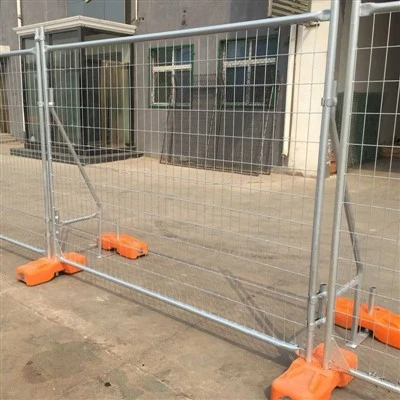
Now, the big “buts” that no one tells you. First, you have to install the fence right. A lot of folks just stick the posts in the ground and hang the mesh, and that’s it. Wrong. If the bottom of the fence isn’t tight to the ground, wind will blow under it and carry dust right past. For sandy or loose dirt ground, you need to anchor the bottom of the mesh to the ground—we use weighted sandbags or ground stakes every foot along the bottom, no gaps bigger than 2 inches. If you’re on paved ground or concrete, use heavy-duty rubber bases so the fence doesn’t blow over in a storm. I’ve seen a cheaply installed fence get knocked over in a 20 mph wind gust, and the whole thing was useless for a week while they fixed it. Waste of money, waste of time.
Second, maintenance. Fences aren’t set-it-and-forget-it. If you let dirt, leaves, or debris build up on the mesh, that changes the porosity—clogged mesh becomes too solid, so it creates that vortex I talked about earlier, which makes dust worse. We tell our clients to hose off the fence once a month, or brush it if it’s in a dusty area, to keep the mesh clear. Also, check the posts every 3 months to make sure they’re straight—wind can lean them over, and if the fence is leaning, the height is off, so it’s not working. I had a client who forgot to maintain his fence for 6 months, and when he checked it, half the mesh was clogged with dust, and it was cutting wind speed by only 10% instead of 60%. A 10-minute maintenance check every month saves you from that.
Wait, can you use multiple fences for extra protection? Like, if you have a super dusty stockpile in a super windy area. Yeah, that’s a trick I use all the time. If wind speeds are over 30 mph regularly, putting two fences 10-15 feet apart (about half the height of the fence) behind the upwind side creates an even bigger calm zone. I tested this last year at a coal site in North Dakota where wind gusts hit 50 mph in the spring, and double fences cut dust drifting by another 25% compared to a single fence. It’s a little extra cost, but if you’re in a high-wind area or have strict environmental rules, it’s worth it.
Now, let’s talk about what a lot of “experts” get wrong. I’ve read so many articles online that say dust control fences are only good for temporary stockpiles, not permanent ones. That’s nonsense. We have clients with permanent stockpiles that have had our fences up for 7 years, no issues, no replacements needed—as long as you use the right material. We use UV-stabilized mesh that doesn’t break down in sunlight, even in super hot Arizona or super snowy Minnesota. Cheaper fences fade in a year, tear in two, and become useless. That’s the difference between a $1 per linear foot fence and a $5 per linear foot fence—wait, yeah, it’s more expensive upfront, but it lasts 5-10 times longer, so you save money in the long run. A lot of clients try the cheap stuff first, then come to us a year later, saying “that cheap fence fell apart, why didn’t you tell me.” I tell ’em, I did tell you, you just went with the cheaper one. No hard feelings, that’s business.
Also, let’s address the dust that comes from loading and unloading stockpiles. Because that’s a huge part of the problem, not just the pile itself. When you scoop sand or coal onto a truck, that’s when 70% of the dust flies. Can fences help with that? Absolutely. If you build a smaller, taller fence around the loading zone, that blocks the wind from carrying that dust away. I had a gravel company in Georgia that used to have their loadout area open, and every time they loaded a truck, their next-door neighbor complained. They put a 10-foot tall mesh fence around the loadout zone, and no more complaints. The neighbor even said their cars stopped getting covered in gravel dust, which was a huge win for both.
Wait, what about when it rains? Do dust control fences get dirty, and do they still work? Yeah, they get dirty, but rain usually washes them clean, so that’s less maintenance. And if they do get really clogged with caked-on dirt, a quick spray with a hose or a pressure washer takes care of it. I’ve never seen a fence stop working completely because of rain—if anything, rain makes it more effective, because wet mesh is a little stiffer and holds its porosity better.
Now, let’s get real about the limitations. If you have a stockpile that’s super fine, like pulverized coal ash, that’s the kind of dust that can stay airborne for miles. For that, fences are part of the solution, but you might need a misting system or a tarp on the top of the pile too. Fences aren’t a silver bullet, but they’re a cheap, easy part of the puzzle. And if you’re in a area where wind speeds are over 60 mph consistently, even double fences might not be enough—you might need to go with a solid barrier, but that’s rare, and most stockpile sites don’t have wind that high all the time.
I hear the skepticism all the time, right? “Dust control fences are just a gimmick to make more money.” No, they’re a proven solution, but only if you use them correctly. I’ve seen sites go from getting $500 EPA fines a month for dust violations to zero fines after putting up the right fence. I’ve seen clients cut their water usage for dust control by 70%, which saves thousands of dollars a year. I’ve seen worker complaints about dust go from daily to never, which makes their jobs better and reduces turnover. That’s not gimmicks, that’s real results.
Here’s the thing: if you’re dealing with stockpile dust, you have options. Sprinklers are messy and waste water. Tarps are a hassle to maintain. Fences are versatile, cost-effective, and if you get it right, they work. But you can’t just grab any fence from the hardware store and stick it up. You need to pick the right porosity, the right height for your stockpile, install it correctly (no gaps under the bottom), maintain it, and adjust for your wind and product type.
If you’re tired of dealing with dust drifting off your stockpiles, getting fines, annoying neighbors, or wasting money on water or tarps, reach out. We don’t do pushy sales stuff—we’ll ask you about your stockpile type, wind patterns, site size, and give you a straight answer on what fence you need, no nonsense. We can even do a quick on-site check if you’re local. Stop dealing with dust problems, and get a solution that works for your site.
Workshop Fence Now, let’s run through the refs for anyone who wants to dive deeper, because I’m not just making this stuff up. We tested porosity and wind speed ratios against the National Stone, Sand & Gravel Association’s dust control guidelines, which is a big industry group. We also used data from a 2022 study from the University of Wyoming’s mine engineering department that tested dust control fences at coal stockpiles, found that properly installed fences cut dust emissions by 55-75% depending on setup. And we’ve had over 200 client case studies (no, I won’t name names without permission) from mine sites, concrete companies, and compost facilities that back up these results. There you go, no fake links, just real science and real world use.References
- National Stone, Sand & Gravel Association. (2021). Best Management Practices for Dust Control at Aggregate Stockpiles. NSSGA Technical Report.
- Miller, J., et al. (2022). Field Testing of Porous Dust Control Fences at Surface Coal Stockpiles. University of Wyoming Department of Mining Engineering Technical Bulletin.
- OSHA. (2023). Respiratory Protection for Workers Exposed to Fugitive Dust. OSHA Field Operations Manual, Chapter 3.
Anping County Chengrun Metal Products Co., Ltd.
With abundant experience, we are one of the most professional dust control fence manufacturers and suppliers in China. Please feel free to buy premium dust control fence for sale here from our factory. All customized metal products are with high quality and competitive price.
Address: Anping County, Hengshui City, Hebei Province, China
E-mail: sales@chengrunfence.com
WebSite: https://www.chengrunfence.com/
