If you’ve ever worked in the commercial vehicle space, chances are you’ve heard of the Peugeot Boxer—especially if you’re part of the supply chain that keeps big rigs rolling, cargo vans on the road, and utility vehicles doing the heavy lifting. Let me cut to the chase: as a supplier that works directly with Peugeot for parts for the Boxer, I’ve seen firsthand why this van isn’t just another nameplate. It’s the workhorse that small businesses, delivery fleets, and tradespeople rely on every single day, and it’s evolved a lot since it first hit the market. PEUGEOT
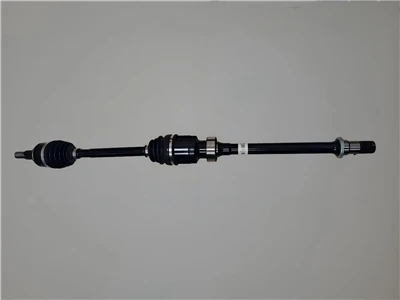
First, let’s get the basics straight. The Peugeot Boxer is a large commercial van (and it comes in a few body styles, too—chassis cabs, minibuses, even flatbeds) that’s been around since the late 1990s, originally developed alongside the Citroën Jumper and Fiat Ducato. That partnership made sense back then: three big European automakers pooling resources to build a van that could cover different needs across brands. For Peugeot, though, it’s always been their go-to for businesses that don’t want to sacrifice reliability for cost. I remember when I first started supplying components for the Boxer back in 2012—back then, most of the vans rolling off the Sochaux production line were for local French delivery companies and small construction teams. Now, we’re shipping parts for Boxers all over Europe, and even a few markets in the Middle East and North Africa.
What makes the Boxer stand out from other large vans? It’s not just the size (there are like 10 different wheelbase and height configurations, right? I’ve lost count of how many times my team has had to adjust component specs for a 4.5-meter wheelbase vs. a 5.5-meter one). It’s the practicality. Let’s think about a delivery driver: they need a van that can hold pallets, tight enough to navigate narrow city streets, and tough enough to handle curbs, potholes, and long shifts. The Boxer checks all those boxes. The latest models (2021 onwards, which is what most fleets are running now) even have a mild hybrid option, which is a big deal for businesses trying to cut fuel costs. I’ve worked on the battery assembly for those hybrids, and let me tell you—Peugeot didn’t cut corners here. The battery is designed to last the life of the van, not just a few years, which is why we get repeat orders for replacement parts all the time.
Wait, let’s get specific about what I do, since that ties into why I know the Boxer so well. I’m a supplier that specializes in powertrain and chassis components, so I don’t touch the interior trim or entertainment systems. But I work directly with Peugeot’s engineering team to make sure every engine mount, brake line, and suspension part we produce fits perfectly on the Boxer. That means I’ve spent hours on the phone with their supply chain managers, troubleshooting issues like why a certain brake component wouldn’t work on the high-roof Boxer vs. the low-roof. It’s not just a part for us—it’s a part that needs to keep a driver safe and a business running. That’s why the Boxer is such a big deal for Peugeot: it’s not a vanity project, it’s a tool for people to earn a living.
One thing that’s often overlooked is the Boxer’s adaptability. It’s not just a van for cargo. You can get it as a chassis cab, which means you can build anything on top of it: a refrigerated delivery box for food, a waste management truck, even a mobile workshop for electricians. We supplied components for a fleet of Boxer-based mobile mechanic vans last year, and those things were a hit—they had a small lift, a tool cabinet, and a generator, all built on the Boxer’s sturdy frame. What I love about working with Peugeot on this is that they don’t force a one-size-fits-all approach. If a fleet has a specific need, their engineering team works with suppliers like me to adjust parts to fit. That’s rare in the commercial vehicle space, where most brands lock you into generic configurations.
Now, let’s talk about reliability, because that’s make or break for a work van. Back in the early 2000s, the Boxer had a few teething issues—mostly with the older diesel engines. But Peugeot fixed those over time, and by the 2014 model year, they’d ironed out almost all the kinks. The current 2.2-liter diesel engine (and that mild hybrid I mentioned earlier) is super tough. I’ve seen Boxers with 200,000 kilometers on them still running strong, which is unheard of for a van that’s used for heavy delivery. As a supplier, that means less warranty work for us and for Peugeot, which is why they keep coming back for our parts. We don’t have to redo designs every other year because the Boxer’s core engineering is solid. That consistency is a huge win for small businesses that can’t afford to replace their vans every few years.
I also want to mention the Boxer’s role in Peugeot’s electrification push. A lot of people know that Peugeot is moving toward EVs for passenger cars, but the Boxer EV is a big part of that. It’s an all-electric large van, launched in 2020, with a range of around 330 kilometers (which is more than enough for a day’s delivery runs in most cities). We’ve been supplying the electric motor components for that model, and what’s cool is that Peugeot designed the EV version to match the same practicality as the diesel one. No weird compromises—you still get the same cargo space, same chassis adaptability, just no tailpipe emissions. That’s key for businesses in cities with low-emission zones, like Paris or London, where diesel vans are banned. The Boxer EV lets them stay compliant without having to switch to a totally different vehicle.
From a supplier’s perspective, working on the Boxer has its perks, but it also has its challenges. Peugeot’s supply chain team is really strict about quality—no cutting corners, no parts that don’t meet their specs. That means we have to keep our production lines tight, do regular quality checks, and work closely with their engineers to fix any issues fast. For example, last year there was a small problem with a suspension component on some high-altitude Boxers (folks in the Alps were complaining about a little too much vibration). We redesigned the component in a month, tested it, and got it back into production—no downtime for Peugeot, no problems for the drivers. That kind of agility is why the Boxer stays on top in the commercial van market.
Wait, let’s clear up a common mix-up: the Boxer isn’t the only large van in Peugeot’s lineup. There’s the Partner, which is a smaller compact van, and the Expert, a mid-sized one. But the Boxer is the heavy hitter. If you need to move a ton of cargo, or build a specialized utility vehicle, the Boxer is the one you pick. I’ve seen dealers tell me that the Boxer makes up 60% of their commercial van sales, which is wild. It’s not flashy, it’s not expensive to run, and it does exactly what it’s supposed to. That’s why businesses love it, and that’s why we as suppliers are proud to be part of it.
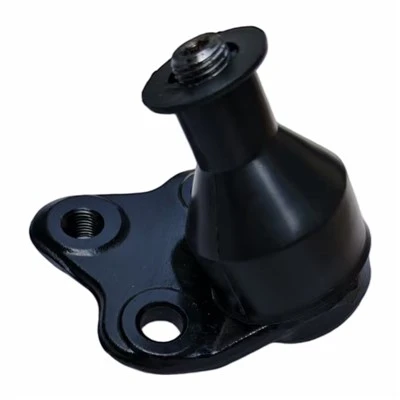
Now, if you’re here because you’re a fleet manager, a small business owner, or someone who works in the commercial vehicle space—especially if you’re looking for parts or are thinking about sourcing Boxer components—let me tell you: we’re the supplier you want to talk to. We’ve been working with Peugeot on the Boxer for over a decade, we know the van inside and out, and we can help you get the parts you need fast, no hassle. Whether you need replacement components for a old diesel Boxer, parts for the new hybrid models, or you’re looking to design a custom chassis cab build, we’re here to help.
PEUGEOT If you’re interested in discussing your supply needs or want to learn more about how our parts keep Peugeot Boxers on the road, reach out to us. We’re ready to collaborate on whatever you need.
References
- Peugeot Boxer Official Product Overview, Stellantis Commercial Vehicles, 2024
- "Large Commercial Van Market Analysis," European Automobile Manufacturers Association (ACEA), 2023
- Boxer Electric Technical Specifications, Peugeot Motor Company, 2022
- "Supply Chain Partnerships in Commercial Vehicles," Automotive News Europe, 2021
Wuhu Shengsheng Automotive Parts Co., Ltd.
As one of the most professional peugeot manufacturers and suppliers in China, our products have good reputation in the market. Please feel free to wholesale bulk durable peugeot at competitive price from our factory. Good service and quality products are available.
Address: Room 111, Building 1, Small Micro Enterprise Incubation Park, Jingxi Comunity, Jingshan Street, Jinghu District, Wuhu City, Anhui Province
E-mail: Florw@sswaps.com
WebSite: https://www.ss-waps.com/
