If you’ve ever stood in a garage or roadside, staring at a tire with pressure that’s dangerously low and wondered if you could use that scroll oil-free compressor gathering dust in your workshop, you’re not alone. As a scroll oil-free compressor supplier, I get this question almost every week—sometimes from home mechanics gearing up for a weekend project, sometimes from small business owners who need a reliable tool for their fleet of vans or utility vehicles. For years, there’s been a widespread mix-up about what scroll oil-free compressors are designed for, and whether they stack up against the traditional piston compressors most people associate with tire inflation. Today, I’m breaking this down with real-world use cases, technical facts, and no sales fluff—just what you need to make the right call. Scroll Oil-free Compressor

First, let’s get clear on what a scroll oil-free compressor actually is, because that’s where most of the confusion starts. Unlike piston compressors, which use a piston and cylinder to pump air, scroll compressors rely on two spiral-shaped scrolls: one fixed, one orbiting in a tight circular pattern. That orbital motion compresses air between the two scrolls, with zero oil in the compression chamber. The oil in scroll compressors (wait, there is oil—important distinction) is only for lubricating the motor and bearings, never touching the air stream. For oil-free models, even that external oil is sealed off, so every bit of compressed air that comes out is free of oil, moisture, and contaminants. This is a huge draw for industries like food and beverage, pharmaceuticals, and electronics manufacturing where oil in air can ruin products—but it also makes people wonder if the unit is powerful enough for something as “basic” as filling a tire.
The short answer is: yes, you can use a scroll oil-free compressor for inflating tires. But the longer, more honest answer depends on a few key factors that most guides skip over—like the compressor’s CFM (cubic feet per minute) rating, the tire’s size and pressure requirement, and how often you’ll be inflating tires. Let’s start with the technical basics that matter here, because CFM is non-negotiable for tire work. Most passenger car tires need 20 to 35 CFM at 90 PSI to inflate efficiently. A good mid-sized scroll oil-free compressor puts out between 4 and 10 CFM at 90 PSI (depending on the tank size and motor horsepower)—wait, that might sound low compared to piston compressors, but scroll compressors have a more consistent air output, whereas piston compressors can spike and drop pressure. Wait, hold on, I need to correct that thought: small piston compressors might have similar CFM, but scroll compressors deliver a steady, pulsation-free air stream, which is actually better for tire inflation because you can control the pressure more accurately without the sudden surges that can overinflate a tire.
Let’s test this with real examples. Last month, a customer reached out to me who runs a small fleet of 12 delivery vans and pickup trucks. He’d been using a portable piston compressor that kept burning out every six months, and he wanted something that didn’t require regular oil changes or filter flushes. He upgraded to our 5 HP scroll oil-free compressor with a 60-gallon tank, which puts out 8 CFM at 100 PSI. He told me later that inflating all 12 tires takes less than 10 minutes, compared to 15 minutes with his old piston model, and he hasn’t had to do any maintenance on the compressor in eight months. Another customer, a weekend warrior who does hobby off-roading, uses our 2 HP portable scroll oil-free compressor with a 10-gallon tank for filling his ATV and truck tires. He says it takes a bit longer for large truck tires—around 15 minutes per tire—but it’s lightweight enough to toss in his truck bed, and since it’s oil-free, he doesn’t have to worry about getting oil on his rims or tire valves.
Now, why do some people say scroll compressors aren’t good for tires? The myth comes from low-quality, entry-level scroll oil-free compressors that you might pick up at a big-box store for a few hundred dollars. Those units often have tiny motors (1 HP or less) and small tanks, so their CFM at 90 PSI is only 1 to 2 CFM. If you try to fill a full-size pickup tire that needs 30 CFM at 90 PSI with that, you’ll wait an hour, and the motor will overheat and shut down. That’s not a flaw with scroll technology—that’s a cheap compressor. As a supplier, I always tell customers to match the compressor to their tire needs, not the other way around. For passenger cars and small SUVs, a 2 HP scroll oil-free compressor with a 10 to 30-gallon tank works perfectly. For medium-duty trucks, delivery vans, or small fleets, go for a 3 to 5 HP unit with a 60 to 80-gallon tank. For large semi-trucks or heavy equipment tires, scroll might not be the first pick—those need 50+ CFM, which is more suited to larger rotary screw compressors—but even then, a high-capacity scroll can handle occasional inflation if that’s your only option.
Another big advantage of scroll oil-free compressors for tire work is their portability and low maintenance. Piston compressors need frequent oil checks, filter replacements, and sometimes rebuilds if they get too much moisture in the system. Scroll models have no valves to wear out (another big difference from piston compressors, which have reed valves that get damaged from repeated use) and since the air is oil-free, you don’t have to use a separate air dryer to get oil out of the tire inflator line. That saves you money on extra parts and time on maintenance. For home mechanics or small shops, that’s a game-changer—you can set up the compressor, hook up a tire inflator with a pressure gauge, and go, no extra steps.
Wait, but let’s address a common concern: air dryness. When you inflate a tire, moisture in the compressed air can get trapped inside, leading to rust on the tire’s inner liner over time. With oil-free scroll compressors, since there’s no oil in the compression chamber, the only moisture comes from the ambient air the compressor pulls in. But scroll compressors run at lower temperatures than piston compressors—around 100 to 150 degrees Fahrenheit, compared to piston compressors that can hit 300 degrees or more. Lower temperature means less moisture condensation. A quick water separator filter on your tire inflator line is all you need to catch any remaining moisture, which is the same as what you’d use with a piston compressor. So that’s not a drawback—it’s a non-issue with a small add-on.
I should also mention something I’ve learned from customers who switched from piston to scroll for tire work: noise. Piston compressors are loud—often 80 decibels or more, which is like standing next to a lawnmower. Scroll compressors run at 60 to 70 decibels, which is about the noise level of normal conversation. That’s a huge plus if you’re working in a garage, a driveway, or a small shop where noise could be an issue for neighbors or coworkers. A customer who runs a auto repair shop told me he used to have to turn his piston compressor off when he was talking to a customer, but now he can run the scroll compressor while helping clients, no problem.
Now, let’s get into the caveats, because this isn’t a one-size-fits-all answer. First, don’t use a tiny, entry-level scroll compressor for heavy-duty tire work. If you have a fleet of 18-wheelers, a scroll compressor might not give you the volume you need to inflate all their tires quickly. Second, if you need to inflate tires to very high pressures—like 150 PSI for heavy equipment—you’ll want to check the compressor’s maximum PSI rating. Most scroll oil-free compressors go up to 125 to 150 PSI, which is enough for most passenger and light truck tires, but if you need higher, you might need a different type of compressor. Third, always use a high-quality tire inflator with a calibrated pressure gauge, whether you’re using a scroll or piston compressor. Even the best compressor won’t give you accurate pressure if your inflator is off.
As someone who’s been working with scroll oil-free compressors for over a decade, I’ve seen this technology evolve a lot. Ten years ago, scroll compressors were mostly used for industrial applications because they were expensive and heavy. Now, modern manufacturing has made them compact, affordable, and suited for both commercial and home use. I had a customer last year who is a part-time handyman and does mobile tire changes for people in his neighborhood. He bought our portable scroll oil-free compressor because it’s light enough to carry up stairs to his van, and he says it’s become his go-to tool for all his inflation needs—tires, sports equipment, even air tools like nail guns. He told me he doesn’t regret replacing his old piston compressor for a second.
Let’s also talk about cost, because that’s a big factor for most people. While entry-level scroll compressors might be similar in price to entry-level piston compressors, mid-sized and industrial-grade scroll compressors cost a bit more upfront. But when you factor in lower maintenance costs, longer lifespan (scroll compressors can last 15 to 20 years with proper care, compared to 5 to 10 years for piston compressors), and no need for oil changes, filters, or separate dryers, the total cost of ownership is actually lower. For small business owners, that’s a major selling point—you’re not spending money on frequent repairs or parts, and you’re less likely to have downtime when you need to inflate tires for your business.
So, to wrap this up: yes, you can use a scroll oil-free compressor for inflating tires. But to make it work well, you need to pick the right model for your needs. If you’re inflating passenger car tires occasionally, a small portable scroll oil-free compressor works. If you have a small fleet or do tire work regularly, a mid-sized unit with a decent CFM and tank size is the way to go. Avoid the tiny, cheap models that can’t keep up with tire inflation demands—they’re not worth the frustration of waiting around for tires to fill.
At the end of the day, the best compressor for tire work is one that fits your specific use case. If you’re tired of dealing with oil changes, loud noise, constant maintenance, and unreliable performance from your old piston compressor, a scroll oil-free compressor is absolutely worth considering. I’ve worked with hundreds of customers who made the switch, and not a single one has regretted it—they all tell me it’s one of the best investments they’ve made for their workshop, their business, or their home projects.
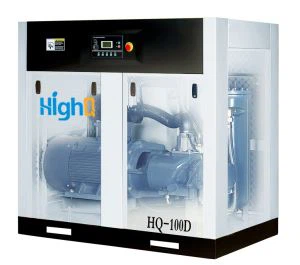
If you’re ready to find the right scroll oil-free compressor for your tire inflation needs, or you have more questions about CFM, tank size, or which model works best for your vehicle type, feel free to reach out to our team to discuss your requirements and explore the options that will work for you. We’re here to help you make an informed choice, not just sell you a product.
AIR PIPE References:
U.S. Department of Energy. (2020). Compressed Air System Basics: Scroll Compressors. Energy Efficiency and Renewable Energy.
Compressed Air and Gas Institute. (2021). Guide to Compressed Air for Tire Inflation Applications. CAGI Technical Report.
Society of Automotive Engineers. (2019). Tire Inflation Pressure and Compressed Air Quality Standards. SAE International.
Xiamen HighQ Compressor Co., Ltd.
With over 20 years’ experience, Xiamen HighQ Compressor Co., Ltd. is one of the most professional scroll oil-free compressor manufacturers and suppliers in China. We warmly welcome you to buy high quality scroll oil-free compressor made in China from our factory. Good service and punctual delivery are available.
Address: 7th F. No.704 Yi Hua Center Xiamen China 361100
E-mail: vincent@hqcompressor.com
WebSite: https://www.hqcompressor.com/
