When I’m out driving around town—whether it’s a quick trip to the grocery store or a long haul between cities—I can’t help but notice utility poles. Some stand tall over residential streets, others hug the ground tightly along rural backroads, and a few reach sky-high near busy intersections. For years, I’ve gotten questions from customers, neighbors, and even new hires at our power utility pole supply business: Why aren’t all utility poles the same height? It’s a question that doesn’t pop up in everyday conversation, but it’s one that’s critical to every part of how power gets from a generation plant to your living room outlet. After 12 years in this industry, I’ve learned the answer isn’t random—it’s a mix of engineering necessity, land use rules, and cost efficiency that shapes every pole we manufacture and deliver. Power Utility Pole

Let’s start with the most obvious factor: the power lines themselves. Not all lines carry the same voltage, and that difference dictates how high a pole needs to be. Low-voltage lines—those that power single homes, streetlights, and small businesses—typically run at 120 to 480 volts. These don’t need as much clearance between the line and the ground, so the poles holding them up are usually shorter, ranging from 30 to 45 feet. Drive down any suburban side street, and you’ll see these poles at work: they’re easy to climb for linemen, their height keeps lines above cars and small landscaping, and they’re the most economical choice for low-capacity power.
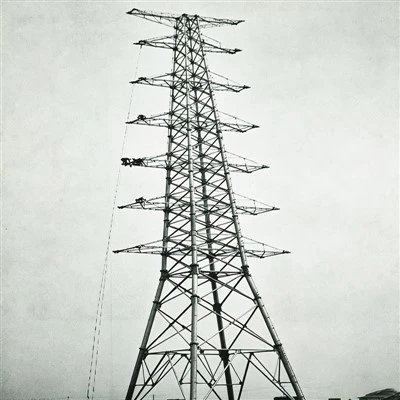
But step onto a main road, and the poles get taller. Distribution lines that carry power to entire neighborhoods run at 2,400 to 34,500 volts, and they need more space to prevent accidental contact with cars, trucks, or even people working near the lines. These poles hit the 50 to 80 foot range. Then there are transmission lines—the ones that move bulk power from power plants to substations—operating at 69,000 volts or higher. Those lines need massive clearance, often 50 feet or more above the ground, so the poles holding them are the tallest in the utility network, sometimes exceeding 100 feet. I remember a job last year out in the Midwest where we delivered poles to a transmission line crossing a valley; we had to use a specialized crane to set those 110 foot poles, because any shorter and the lines would have dragged on the ground during heavy spring rains.
Next, add the height of obstacles in the area. A pole in a residential neighborhood doesn’t have to clear much beyond cars and small trees, but a pole near a highway needs to clear semi-trucks, trailer loads, and even construction equipment. Local road regulations set specific minimum clearance heights: in most states, highways require lines to sit at least 18 feet above the road surface, while some secondary roads only need 15 feet. That’s why you’ll see poles along interstates are consistently taller than those on residential streets—every extra foot is there to comply with safety rules that prevent power lines from coming into contact with vehicles.
Land use also plays a big role. In dense urban areas, utility lines often run underground, so the poles that do exist there are short—sometimes just 20 feet tall—to fit between buildings and avoid interfering with rooftops or overhead structures like subway vents. But in rural areas, where there’s more open space and fewer underground utilities, poles can be taller because there’s no need to tuck them into a crowded environment. I once worked on a project in a remote mountain town where the poles had to be extra tall to clear pine trees that tower over most other vegetation; if we’d used a standard 40 foot pole, the lines would have tangled in tree branches during wind storms, causing outages for weeks.
Environmental conditions are another key piece of the puzzle. In areas with heavy snow or ice, lines sag more under the weight, so poles need to be taller to account for that extra drop. A pole in the Great Lakes region, where ice storms are common, might be 10 to 15 feet taller than a similar pole in a dry, flat state like Arizona. Wind also matters: in coastal areas with strong hurricanes, poles need to be taller and sturdier to withstand high winds, but there’s a catch—taller poles can sometimes catch more wind, so engineers have to balance height with structural integrity. That’s why we reinforced a lot of the poles we deliver to Florida and the Gulf Coast with extra steel cores, even if their height isn’t drastically different from inland poles; the wind load makes every foot count.
Cost is a factor that everyone working in utility infrastructure deals with, and pole height is no exception. Taller poles require more materials—more wood, steel, or concrete—so they’re more expensive to manufacture, transport, and install. A 100 foot pole might cost three times as much as a 30 foot one, and hauling it to a remote site can add even more to the bill. Utilities only go for taller poles when it’s necessary, because they have to stay within tight budgets. That’s why you won’t see 80 foot poles in a small rural town with only a few homes—shorter poles are cheaper and perfectly functional for low-voltage lines. I tell my customers all the time: there’s no sense in paying for extra height you don’t need.
I’ve seen how this all comes together in projects big and small. A few months ago, a utility company in a suburban Chicago neighborhood reached out to us for poles for a new housing development. They wanted 40 foot poles for the low-voltage lines powering the homes, but 60 foot poles for the distribution lines running along the main road. The reason? The main road has a 16 foot clearance requirement for semi-trucks, so the distribution lines needed that extra height to comply. We delivered both sizes, and the linemen installed them in just a few days—they knew exactly which pole went where, because they’d worked on similar projects before.
Another time, a company in the Rocky Mountains needed poles for a line crossing a national forest. The trees there grow 70 feet tall, so standard 50 foot poles wouldn’t have cleared them, and the utility couldn’t run underground because the terrain was too rugged. They opted for 85 foot poles, reinforced with pressure-treated wood to resist rot from the mountain moisture. We had to use a flatbed truck with a custom trailer to haul the poles up the winding mountain road, but it was worth it—those poles have been standing for three years, and there hasn’t been a single outage from tree contact.
This work isn’t just about manufacturing poles, either. It’s about understanding the unique needs of each location, whether that’s a busy city intersection, a remote farm, or a coastal town prone to hurricanes. That’s why our team spends time talking to every customer before we quote a job: we ask about the voltage of the lines, local regulations, environmental factors, and budget. A customer who only needs poles for a small farm doesn’t need to pay for extra height, just like a customer building a transmission line can’t cut corners on clearance.
If you’re a utility company, contractor, or developer working on a project that needs utility poles, you probably already know that choosing the right height is make-or-break for safety, reliability, and cost. Too short, and you risk outages, safety hazards, and even fines for non-compliance with local rules. Too tall, and you waste money on materials and installation that don’t add value. Our team has decades of experience helping clients navigate all these factors, so you don’t have to. We don’t just sell poles—we partner with you to make sure you get the right product for your specific needs, whether that’s a short pole for a residential street or a tall, reinforced pole for a tough environment.
Substation Steel Structure If you’re ready to discuss a project, need a quote, or just have more questions about pole specifications, we’re here to help. Whether you’re working on a small local job or a large-scale infrastructure project, our team has the expertise and inventory to meet your needs. Reach out to us to start a conversation about your utility pole requirements.
References
- Edison Electric Institute. (2021). Utility Pole Safety and Design Standards. Washington, D.C.
- National Electrical Manufacturers Association. (2020). Specification for Utility Poles and Overhead Lines. Rosslyn, VA.
- U.S. Department of Energy. (2019). Rural Electrical Infrastructure Best Practices. Washington, D.C.
- American National Standards Institute. (2022). Safety Standards for Overhead Power Lines. New York, NY.
Qingdao Hongyuanfeng Power Equipment Co., Ltd.
Hongyuanfeng is one of the most professional power utility pole manufacturers and suppliers in China, also supports customized service. Please feel free to wholesale advanced power utility pole in stock here from our factory. Good service and quality products are available.
Address: No.42 Fengwu Road, Beiguan Industrial Park, Jiaozhou City
E-mail: 13808970205@163.com
WebSite: https://www.hyfsteelpod.com/
