If you’ve ever walked through a warehouse, manufacturing yard, or construction site, chances are you’ve seen a diesel forklift working hard to move pallets, stack materials, or load and unload trucks. For decades, these machines have been the workhorses of industrial material handling, valued for their torque, long runtime, and ability to operate in tough environments where electric forklifts (battery-powered) can’t keep up. But here’s a question I get asked almost every week by new clients, operations managers, and even fellow industry folks: “Are there electric start diesel forklifts?” Diesel Forklift
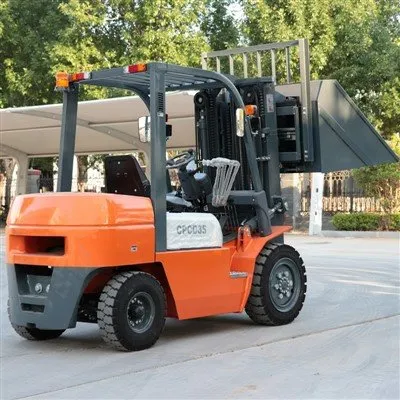
As a diesel forklift supplier with over 12 years in the business, I don’t just give a yes or no answer— I walk people through what electric start means for diesel engines, how it fits with the demands of modern operations, and why it’s become such a popular upgrade for fleets that used to rely on manual pull starts or old-style electric starts. Let’s break this down, because the answer isn’t as simple as it sounds, and it’s one that’s changed a lot over the years.
First, let’s clear up a common mix-up. A lot of people hear “electric start” and immediately think of battery-powered forklifts. That’s not the same. An electric start system for a diesel forklift is a specific component that replaces the old, manual method of cranking the engine to get it running. Back in the day, smaller diesel engines (especially those on older forklift models) required a hand-crank to start—you’d grab a heavy steel lever, pull it hard enough to turn the engine over, and hope you got it on the first try. For larger diesel engines, that wasn’t even feasible; you’d need a helper or a pull cord system that was slow and exhausting. Electric start systems use an electric motor (powered by a deep-cycle battery) to turn the engine’s crankshaft, making start-up instant and reliable, even in cold weather or high-use environments.
So yes, electric start diesel forklifts exist—and they’re not a niche product anymore. Today, nearly every new diesel forklift manufactured for commercial use comes with an electric start system as a standard feature. But why was that not always the case? Let’s go back to the basics of diesel engines to understand the history.
Diesel engines work by compressing air inside the cylinder until it’s hot enough to ignite fuel, which is injected directly into the chamber. Unlike gasoline engines, they don’t use spark plugs—so starting them relies entirely on getting the crankshaft spinning fast enough to reach that compression temperature. For small, low-power diesel engines (like those used on old compact forklifts), a pull start was enough for occasional use. But as forklifts got bigger, their diesel engines got more powerful—often 2.5 liters, 3 liters, or even 4 liters, with hundreds of pounds of torque to lift heavy loads. Turning that over manually or with a pull cord was impossible. That’s where electric start became a game-changer.
By the 1980s, most major forklift brands (Yale, Hyster, Komatsu, Caterpillar) had rolled out electric start systems for their diesel forklift lines. But early versions had their kinks. Back then, the lead-acid batteries used for electric starts were bulky, heavy, and could die unexpectedly if left unused for a few days. A driver would show up to work, plug in the forklift’s charger overnight, and if the charger failed, they’d be stuck with a dead battery and a truck that wouldn’t start. Over time, battery technology improved—gel-cell batteries, maintenance-free lead-acid, and even lithium-ion options now mean electric start systems are far more reliable, with longer life spans and lower failure rates.
Now, as a supplier, I see two main types of electric start diesel forklifts that my customers ask about regularly: internal combustion (IC) diesel forklifts with electric start, which are the standard for most industrial uses, and rough-terrain diesel forklifts with electric start, built for off-road jobs like construction sites or lumber yards. Rough-terrain models often operate in extreme cold, mud, or uneven ground—environments where a manual start would be impossible, and an electric start ensures the forklift is ready to go first thing in the morning.
But here’s a question we dig into more with clients: Why choose an electric start diesel forklift over a standard manual start model, or even an all-electric battery forklift? Let’s break down the benefits, because that’s what drives most purchasing decisions.
First, reliability in harsh conditions. Diesel forklifts are used in places that would kill a battery-powered electric forklift: outdoor yards, factories with dust and debris, construction sites where power outlets for charging are scarce. Electric start diesel forklifts don’t rely on overnight charging; they run on diesel fuel, which is easy to refuel in minutes, not hours. If a battery-powered forklift needs a full charge, that’s 8 to 12 hours of downtime. A diesel forklift with electric start can be refueled in 10 minutes, and the electric start means you don’t have to spend time cranking the engine or waiting for batteries to warm up in cold weather. I’ve had clients in northern Minnesota tell me that in -20°F temperatures, a manual start diesel would take 10 minutes of cranking, and half the time it wouldn’t start at all. Our electric start diesel forklifts have block heaters that work with the battery, so start-up is smooth even in the harshest winters.
Second, operator safety and efficiency. Manual start systems aren’t just inconvenient—they’re dangerous. I’ve seen operators pull a crank too hard, slip, and injure their shoulder or back. For larger forklifts, the pull cord could snap and hit an operator, or the engine could kick back. Electric start eliminates that risk entirely. It also cuts down on start-up time: an operator can get the forklift running in 2 seconds, instead of 5 minutes of cranking. That adds up over a 10-hour shift—if a operator starts the forklift 5 times a day, that’s 25 minutes of saved time every day, which translates to more productivity for the fleet.
Third, lower long-term maintenance. Wait, I know some people think electric start adds more parts that can break, and they’re not wrong—but compared to manual start systems, it’s the opposite. A manual start’s crank, pull cord, and starter gears wear out quickly, especially with heavy use. Every time you crank a manual start, those parts take a beating. An electric start system has a durable starter motor (designed to last 10,000+ start cycles) and a battery that, with proper maintenance, lasts 3 to 5 years. That’s less frequent replacement and fewer breakdowns on the job.
Now, it’s not all perfect. There are trade-offs to electric start diesel forklifts that I make sure every customer understands before they buy. For one, the initial cost is slightly higher than a manual start model—usually 10 to 15% more. For small operations that only use a forklift a few times a week, that extra cost might not be worth it. But for medium to large fleets, the savings from downtime, maintenance, and operator safety make up for the difference within a year or two.
Another trade-off is battery dependency. Even though modern batteries are reliable, they can fail if you don’t maintain them. Leaving the headlights on overnight, using the forklift’s accessories (like a heater or work lights) when the engine’s off, or letting the forklift sit unused for more than a month can drain the battery. Our team gives every customer a guide to battery maintenance—things like checking the water level in lead-acid batteries, keeping terminals clean, and using a trickle charger when the forklift is stored—to prevent dead batteries. We also offer optional backup pull starts for customers who work in extremely remote areas where it’s hard to jump start a dead battery, just in case.
And let’s compare to all-electric forklifts, since that’s the main alternative. All-electric forklifts are popular for indoor use, because they produce no exhaust fumes and are quiet. But they have major downsides for outdoor or heavy-use operations: short run time (usually 4 to 8 hours per charge, depending on load), long charging times, and higher upfront cost for lithium-ion models. A diesel forklift with electric start can run 8 to 12 hours on a single tank of fuel, which is perfect for 2-shift operations. For a warehouse that runs a forklift 16 hours a day, refueling once a shift is way easier than recharging twice.
I want to share a recent example from a client of mine, a construction company in Texas that was using a mix of manual start diesel forklifts and battery-powered forklifts. They were losing an average of 8 hours a week to dead battery charges and manual start breakdowns. They switched to 5 of our electric start diesel forklifts last year, and so far, they’ve cut downtime by 90% and saved over $12,000 in maintenance and labor costs. Their operator retention also went up—no more injuries from manual starts, and the work is less physically demanding. That’s the kind of result we see all the time when customers make the switch.
Now, if you’re in the market for a forklift, you might be wondering: How do I know if an electric start diesel forklift is right for my operation? Here are a few questions to ask yourself:
- Is my forklift used mostly outdoors, or in a space without easy access to charging outlets?
- Do I run my forklift for long shifts (8+ hours) without the ability to recharge often?
- Do I have operators who have complained about the physical strain of manual starts, or safety issues from crank injuries?
- Do I operate in extreme temperatures (very cold or very hot) where start-up reliability is critical?
If you answered yes to most of these, an electric start diesel forklift is almost certainly a better fit than a manual start model or a battery-powered forklift.
One thing I make clear to every customer is that not all electric start systems are the same. Cheap, generic starters can fail after a year of heavy use, while the OEM (original equipment manufacturer) starters we use on our diesel forklifts are built to handle the vibration and demand of industrial work. We test every starter before it leaves our warehouse, and we offer a 2-year warranty on all electric start components, which is standard in the industry but something we prioritize because we stand behind our products.
I also get questions about hybrid options, but that’s a different category. Hybrid forklifts combine a small diesel engine with a battery, but they’re not the same as an electric start diesel forklift. An electric start diesel forklift’s battery is only for starting the engine—once it’s running, the engine powers the hydraulics and moves the forklift. A hybrid’s battery is used for powering the machine, and the diesel engine only charges the battery. For most operations, a pure electric start diesel forklift is more cost-effective than a hybrid, because hybrids have more complex parts that require more maintenance.
Let’s address a common misconception: Some people think diesel engines are outdated, and electric forklifts are the future. That’s true for indoor use, but for outdoor, heavy-lift, or remote operations, diesel is still the best option. The Electric start diesel forklift is the best of both worlds—you get the reliability and runtime of a diesel engine, with the convenience and safety of an electric start. It’s not that diesel forklifts are being replaced; they’re evolving to meet the needs of modern industrial operations.
As a supplier, I’ve seen the demand for electric start diesel forklifts grow every year. More and more operations are moving away from manual start models because they can’t keep up with productivity and safety standards. We’ve expanded our line of electric start diesel forklifts over the past 5 years, adding models that lift up to 10,000 lbs, as well as compact models for tight warehouse spaces. We also offer customization options—like extra battery capacity, cold-weather packages, or enclosed cabs with heaters—to fit specific customer needs.
If you’re considering upgrading your forklift fleet, or if you’re tired of dealing with manual start breakdowns and battery-powered downtime, I encourage you to reach out to our team to discuss your needs. We can walk you through the different models, explain the benefits and trade-offs, and help you find the right electric start diesel forklift that fits your budget and operational requirements. We also offer on-site demonstrations for local clients, so you can see how easy and reliable the electric start system is first-hand.
In closing, the answer to “Are there electric start diesel forklifts?” is a resounding yes—and they’re a critical part of modern material handling. They solve the biggest pain points of old manual start systems and the limitations of all-electric forklifts, making them ideal for a wide range of industries from construction and agriculture to warehousing and manufacturing. Whether you’re running a small operation or a large fleet, an electric start diesel forklift can boost productivity, keep operators safe, and lower long-term costs. Don’t let outdated assumptions about diesel forklifts hold you back—reach out to our team today to learn more and find the perfect fit for your business.
2-6.5Tons Mini Crawler Excavators References:
- Occupational Safety and Health Administration (OSHA). "Forklift Operator Safety Guidelines for Internal Combustion Engines." 2022.
- Material Handling Industry Association (MHI). "2023 Industrial Truck Fleet Trends Report."
- SAE International. "Standards for Electric Starting Systems for Heavy-Duty Diesel Engines." 2021.
- Diesel Technology Forum. "Diesel Forklift Applications in Industrial and Construction Settings." 2022.
- Global Material Handling Solutions, Forklift Battery Maintenance Best Practices. 2023.
Jining Sunsail Machinery Co., Ltd.
With abundant experience, we are one of the most professional diesel forklift manufacturers and suppliers in China. We warmly welcome you to buy high-grade diesel forklift made in China here from our factory. For price consultation, contact us.
Address: Room 410, Digital Industry Building, Rencheng District, Jining City, Shandong Province,China
E-mail: Sunsail_machinery@163.com
WebSite: https://www.sunsailmachine.com/
