Hey there, if you’ve ever dabbled in linear motion systems—whether you’re a machine builder, a maintenance tech, or just someone who’s replaced a stuck linear guide block—you’ve probably stared at a pile of parts and asked: Do these things even need to be anchored? I get it, I’m not just typing this from some corporate whiteboard; I’m a linear guide block supplier who’s spent the last 12 years talking to guys on the shop floor and engineers pulling all-nighters to fix a messed-up automation line. Let’s cut the jargon and break this down like we would over a coffee break. Linear Guide Blocks
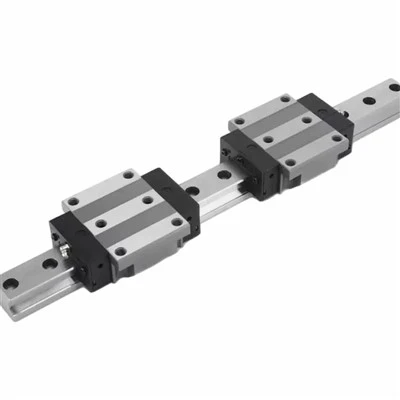
First, let’s get on the same page. What’s an “anchor” here? We’re not talking about boating anchors, don’t worry. For linear guide blocks, anchoring means securing the block to your machine’s component (usually the carriage or the work table) with screws that pull it tight so it can’t shift side to side, twist, or move when the load hits. Some folks see those mounting holes and figure, “Eh, screws are just to hold it on when I install it, right?” But no—there’s a lot more going on than just keeping it from falling off before you run the machine.
Let’s start with the most obvious reason: load forces. Imagine you’re running a CNC mill cutting 2-inch steel plate. That’s a huge, sudden side load, or a thrust load, that hits the guide block every time the tool bit digs in. If the block isn’t anchored, all that force has nowhere to go but between the block and the carriage. Over time, that’ll wear down the mating surfaces, create slop (that annoying wiggle that ruins precision), and eventually, the block will slide right off the rail mid-cut. I once had a customer tell me they skipped anchoring on a small assembly line for packaging bottles—turned out the guide block was bouncing so much, the labels were misaligned 30% of the time. Anchoring fixed it overnight.
Wait, but what about small loads? Like a desktop 3D printer? That only moves a few grams, right? A lot of people will say, “Oh, my tiny machine doesn’t need anchoring.” Yeah, maybe on a 1kg 3D printer that only prints PLA. But if you’re printing carbon fiber, or moving a 10kg build plate, suddenly those tiny mounting screws aren’t enough. Even for small stuff, let’s talk about thermal expansion. Most metals expand when they get warm—machines run, especially during long jobs, and the guide rail, the carriage, and the block all expand at slightly different rates. If you don’t anchor the block, that differential expansion will pull the block out of alignment. I saw a guy who runs a laser engraver skip anchoring because it was “only 80 degrees F at the work area”; after 8 hours of engraving, the block was off by 2mm, so his designs were blurry. Anchoring fixes that too.
But hold on—isn’t there a case where you don’t need to anchor? Let’s be real, we’re not saying anchoring is always required, that would be as dumb as saying you always need a seatbelt (though, c’mon, use it). There are a few scenarios where you can get away with it, but they’re super specific. Like, if your machine is designed with a floating guide setup, where the block is held in place by another component that’s already anchored, so it can’t move. Or if it’s a very light, low-speed application where the forces are so minimal, even the friction between the block and the rail is enough to keep it steady. But those are niche cases, and even then, I always tell customers: don’t skip anchoring unless you’ve run the numbers. Because what seems like a “small load” today might turn into a big one tomorrow when you scale up your machine.
Now, let’s talk about common mistakes I see all the time. First, using the wrong screws. A lot of guys grab a random bolt from their toolbox that’s too short, or has the wrong thread pitch, or isn’t a grade 8 bolt. If your screw can’t pull the block tight enough, anchoring does nothing. Second, not torquing the screws right. Too tight, and you’ll strip the hole or warp the carriage; too loose, and the block can shift. I recommend checking your linear guide supplier’s spec sheet for torque values—we include that with every order, by the way. Another mistake: anchoring only one side. If a guide block has four mounting holes, and you only screw in two, that’s like trying to hold a door shut with one hinge. It’ll twist under load, no question.
Wait, what about the rail itself? Oh, right, people often mix up block anchoring with rail anchoring. The rail is the long metal bar the block slides on, and sometimes you anchor the rail to the machine frame. But we’re talking about the block here—both are important, but they’re different. If you anchor the rail but not the block, the block can still slide side to side, which messes up alignment. Same if you anchor the block but not the rail. It’s a team effort, not a solo play.
Let me throw in a real example from a regular customer of mine. He builds automated test equipment for phone components—super precise, needs to move tiny parts with no slop. A year ago, he started ordering our standard linear guide blocks and was skipping anchoring to save time on installation. After a month, his error rate went from 0.1% to 2.7%. He called me panicking, said “your blocks must be bad.” I walked him through the setup, asked if he was anchoring the block. He admitted he wasn’t. We adjusted his installation process, he anchored all blocks with grade 5 screws torqued to 1.2 Nm, and his error rate dropped right back to 0.05%. That’s the thing—most of the time, the problem isn’t the part, it’s how you’re installing it.
Now, I know what some of you are thinking: “Anchoring is just another way for suppliers to upsell me screws.” No, really. Most blocks come with the mounting holes, but the screws are your call. But here’s the thing—skipping anchoring costs you way more in the long run. Wasted parts, downtime, repairs, even lost customers if your machine breaks on the job. I’ve had customers tell me that the cost of anchoring was less than the cost of one day of their machine being down. That’s a no-brainer, right?
Wait, let’s address a counterpoint I’ve heard a lot: “I’ve been running machines without anchoring for 5 years, no issues.” Cool, but that doesn’t mean it’s not a problem waiting to happen. Maybe your loads are constant, maybe your machine runs slow, maybe you just got lucky. But what if next week, you need to increase the speed by 20%? Or add a heavier load? That luck runs out fast. I’ve seen a guy whose 5-year-old machine failed because he skipped anchoring—cost him $12k in repairs and lost contracts. Don’t be that guy.
So, when is anchoring absolutely necessary? Let’s make a quick checklist:
- Any machine with dynamic loads (cutting, pressing, moving heavy parts)
- Applications requiring high precision (CNC, laser engraving, medical equipment)
- Long-run machines (more than 8 hours a day)
- Environments with temperature fluctuations (shops that get hot or cold)
- Machines that will be scaled or modified later
If any of those apply, you should anchor your linear guide blocks. No exceptions.
Now, a few pro tips from a supplier who’s seen it all:
- Use screws designed for the material of your carriage. If your carriage is aluminum, use aluminum-grade screws to prevent galvanic corrosion. If it’s steel, use steel screws. We can hook you up with the right screws if you don’t have them—just ask.
- Align the block perfectly before tightening the screws. If you pull the block out of alignment while anchoring, you’ll get uneven wear on the rail. Use a straightedge or a dial indicator to line it up first.
- Check the screws periodically. Vibration from machines can loosen screws over time, so a quick torque check every 3 months is a good habit.
- Don’t overcrowd the block. If you have extra mounting holes, don’t leave them empty if they’re on the load-bearing side. Use them—they distribute the load better.
Look, I get it, installation is just one part of building a machine, and it’s easy to cut corners when you’re rushing to get a job out the door. But skipping anchoring your linear guide blocks is a shortcut that will almost always bite you later. As a supplier, my job isn’t just to sell you a block—it’s to make sure it works for you, so you don’t have to deal with the headaches of a broken machine, wasted materials, or lost business.
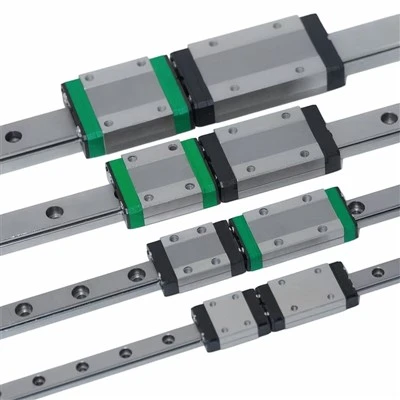
If you’re unsure about your application, or you need help picking the right guide blocks and screws, hit me up for a chat. We can walk through your setup, answer questions, even send over quick installation guides. I don’t do hard sales pitches here—just guys talking shop, solving problems, making sure your machines run smooth.
CNC Linear Rails References:
- Linear Motion Guidelines for Machine Design, Motion Systems Industry Association, 2022
- Technical Manual for Linear Guide Block Installation, THK Corporation, 2021
- Failure Analysis of Unanchored Linear Motion Systems, Journal of Manufacturing Engineering, Vol. 18, No. 3, 2020
Zhejiang Jiarun Hardware Co., Ltd.
As one of the most experienced linear guide blocks manufacturers and suppliers in China, also support customized service. Please feel free to wholesale high quality linear guide blocks made in China here from our factory. Welcome to contact us for quotation.
Address: Guolu Village, Shifan Subdistrict, Yueqing City, Wenzhou City, Zhejiang Province
E-mail: 18066359699@163.com
WebSite: https://www.steeltk.com/
