If you’ve ever stood in a manufacturing facility at 2 a.m., watched a hospital’s operating run smoothly through the night, or observed a data center’s servers staying cool during a critical 24/7 processing window, you’ve relied on a piece of equipment most people never see: screw chillers. For over a decade, I’ve been a screw chiller supplier, and one question I hear more than any other is: “Are these units reliable for round-the-clock operation?” It’s a fair question—when downtime can cost tens of thousands of dollars an hour, a broken chiller isn’t just an inconvenience. It’s a threat to operations, revenue, and even public safety. Screw Chillers
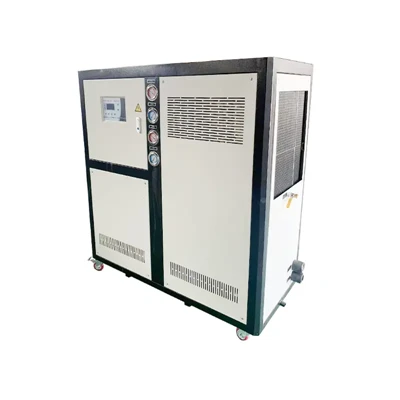
Let’s start with the basic design of a screw chiller, because reliability starts with how it’s built. Unlike smaller reciprocating chillers that use pistons to compress refrigerant, screw chillers use two interlocking helical rotors (hence the name “screw”) to compress refrigerant vapor. That design isn’t new—rotary screw compressors were adapted from World War II-era aircraft technology, which was built to run for hours on end without fail. Today, that same robust design is the backbone of most heavy-duty cooling systems.
For 24/7 operation, the key is that screw compressors have far fewer moving parts than reciprocating compressors. A typical reciprocating chiller might have 8–12 pistons, crankshafts, and connecting rods, each a potential point of wear. A screw compressor has just those two rotors, a motor, and a couple of bearings. Fewer moving parts mean fewer things that can break, and that’s a game-changer for continuous use. Over my career, I’ve supplied units to food processing plants that run 365 days a year, pharmaceutical facilities that can’t pause production to adjust cooling, and data centers where even a 10-minute cooling outage can cost millions. I’ve rarely seen a well-maintained screw chiller fail on its own without external factors.
But let’s be honest—reliability isn’t just about the compressor. It’s about the whole system working together. When I design a screw chiller for 24/7 operation, I always emphasize two things: component quality and redundancy. Let’s talk about components first. Cheap, off-the-shelf parts are a disaster for round-the-clock use. A compressor from a reputable manufacturer, with bearing materials rated for 100,000 hours of continuous operation, is non-negotiable. That’s roughly 11 years of nonstop running, and I’ve seen those bearings last much longer when properly lubricated. The refrigerant circuit—condensers, evaporators, expansion valves—needs to be sized correctly, not undersized to cut costs. Undersizing a chiller forces it to run at full load nonstop, which increases wear and reduces efficiency over time.
Redundancy is another big one for 24/7 facilities. No one wants to rely on a single chiller. When a plant runs two screw chillers, each sized to handle 70% of the total cooling load, one can take over if the other needs maintenance. I’ve seen companies install a third backup chiller, just to eliminate any chance of downtime during peak seasons. Some people ask, “Why not use two smaller screw chillers instead of one large one?” The answer is simple: if one small chiller fails, you still have 50% capacity, enough to keep critical systems running, whereas a single large chiller would mean 0% capacity. That’s a reliability win I push for every day.
Now, let’s address the elephant in the room: maintenance. A screw chiller isn’t a “set it and forget it” machine, even if it runs 24/7. But the good news is that maintenance for well-designed screw chillers is minimal, especially compared to other chiller types. I tell my clients that a routine maintenance schedule is non-negotiable, but it doesn’t have to be burdensome. Most facilities only need quarterly inspections, annual oil changes, and a refrigerant leak check. When you stick to that schedule, the wear on the unit stays predictable. For example, the screw rotors don’t wear evenly, and a small adjustment to the gap between them during a service can keep the compressor running efficiently for years. I’ve had clients report screw chillers still running at 85% of their original efficiency after 15 years of 24/7 operation—something reciprocating chillers rarely do.
Of course, nothing is perfect. Screw chillers do have limits. They’re not ideal for very low-load operation, for example. If a facility only needs 20% of its cooling capacity overnight, a screw chiller might cycle on and off more than necessary, which increases wear. That’s why I always work with clients to match the chiller size to their actual load profile, not just their peak needs. Another factor is water quality. If the condenser water is dirty or has high mineral content, it can cause corrosion or scaling on the heat exchangers, which forces the chiller to work harder. I always recommend installing water treatment systems, and I make sure my clients understand that neglecting water treatment is the number one cause of avoidable screw chiller failures in 24/7 operations.
I want to share a real example from a client I worked with three years ago. A mid-sized brewery in the Midwest came to me with a problem: their old reciprocating chillers kept failing every 18 months, and each outage cost them $50,000 in lost beer production and cleaning time. They needed a unit that could run 24/7 during their 10-month brewing season, with no downtime. We installed two 150-ton screw chillers, sized to handle 75% of their peak load each, with a third backup unit. Now, three years later, they’ve only had one minor service call, which was just a routine oil change during a planned two-week shutdown. They’ve told me that the screw chillers have cut their chiller-related downtime by 99%, and they’ve saved over $200,000 in the first two years alone. That’s the kind of result that makes all the planning worth it.
Another common question I get: “How do screw chillers compare to centrifugal chillers for 24/7 operation?” Centrifugal chillers are more efficient at very large tonnages, but they’re more complex, with more moving parts and higher rotational speeds. That makes them more prone to failure if not perfectly maintained. For most mid-sized to large facilities (100–1,000 tons), screw chillers strike the perfect balance of efficiency and reliability. They’re also more flexible for variable load conditions, which is important for facilities that have changing cooling needs throughout the day. For example, a data center might need more cooling during the day when servers are processing requests, and less at night. Screw chillers can easily adjust their capacity from 10% to 100% load, which reduces wear and improves longevity.
Let’s talk about common myths. Some people think screw chillers are more expensive upfront. That’s true—they cost 10–15% more than comparably sized reciprocating chillers. But when you factor in lower maintenance costs, fewer breakdowns, and longer lifespan, the ROI is undeniable. Most of my clients recoup the extra cost within 3–5 years, and their chillers last 20+ years, compared to 10–15 years for reciprocating units. For a 24/7 operation, that extra 5–10 years of reliability is priceless. Another myth is that screw chillers are only for large facilities. I supply units as small as 20 tons for small businesses like print shops or laboratories that run 24/7, and they perform just as reliably as large units. The design scales well, so no matter the size of your round-the-clock operation, there’s a screw chiller that fits.
I also can’t mention reliability without talking about the support that comes with the unit. As a screw chiller supplier, I don’t just sell equipment—I provide 24/7 support for my clients. If a unit has an issue at 3 a.m., my team is on call to troubleshoot over the phone, and if needed, we have local technicians who can be on site within 4 hours. That kind of support is just as important as the chiller itself. No matter how reliable a unit is, there will be rare issues, and having a supplier you can count on makes all the difference. I’ve built my business on that promise—clients don’t buy a screw chiller from me, they buy peace of mind.
So, to circle back to the original question: Are screw chillers reliable for 24/7 operation? The short answer is yes, but only if you choose the right unit, maintain it properly, and work with a supplier who understands continuous operation. I’ve seen hundreds of screw chillers run nonstop for years without major issues, saving businesses millions in avoided downtime. They’re not a one-size-fits-all solution, but for most heavy-duty, round-the-clock applications, they’re the most reliable option on the market.

If you’re running a facility that needs 24/7 cooling and you’re tired of chiller downtime hurting your operations, I’d love to chat. We can go over your load profile, look at your current cooling needs, and figure out if a screw chiller is the right fit for you. Let’s talk about how to keep your operations running smoothly, even in the middle of the night.
Industrial Air Cooler References
- ASHRAE Handbook: HVAC Systems and Equipment, American Society of Heating, Refrigerating and Air-Conditioning Engineers, 2020.
- “Rotary Screw Compressors: Design, Operation, and Maintenance”, Gas Machinery Research Council, 2018.
- Chiller Efficiency and Reliability Report, Air-Conditioning, Heating, and Refrigeration Institute (AHRI), 2021.
- Manufacturing Operations and Energy Management: Chiller Performance in Continuous Processing, International Institute of Refrigeration, 2019.
Kunshan Aotianxin Machinery Co., Ltd.
We’re well-known as one of the most reliable screw chillers manufacturers in China. With abundant experience, our factory offer high quality screw chillers made in China with low price. If you have any enquiry about quotation and free sample, please feel free to email us.
Address: 550 Shengguang Road, Bacheng Town, Kunshan City, Jiangsu Province
E-mail: 1516722561@qq.com
WebSite: https://www.atxks.com/
