If you’ve ever stood in the produce section of a grocery store, carefully comparing the crispness of a head of romaine or debating whether a carton of blueberries is at peak ripeness, odds are you’ve also noticed a low, steady hum in the background. That hum almost always comes from refrigerated display cases—the workhorses that keep food fresh and visible for shoppers, and for suppliers like me, one of the most common questions we get from grocery store owners, facility managers, and even contractors is: “What is the actual noise level of a refrigerated display case?” Refrigerated Display Case
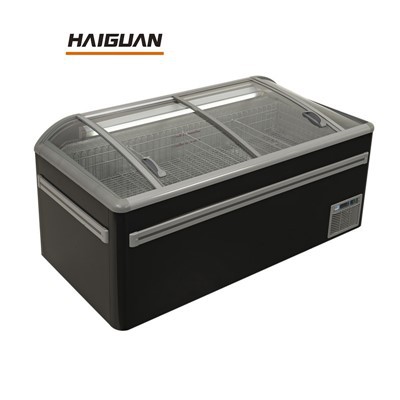
It’s not a trivial question. Noise in a retail setting isn’t just an annoyance—it directly impacts customer behavior. Studies have shown that when a grocery store’s environment is too loud, shoppers rush through their trip, spend less time browsing, and are less likely to impulse-buy items like snacks or ready-to-eat meals. For a retailer, that’s a big deal. So when we’re designing, manufacturing, and selling refrigerated display cases, noise level is as critical a specification as temperature consistency, energy efficiency, or shelf space.
Let’s start with the basics: how is noise measured in refrigerated display cases? We use decibels (dB), the standard unit for sound intensity, with a scale that’s logarithmic—meaning a 10 dB increase is perceived as roughly twice as loud, not just 10 percent louder. To put that in context, a whisper is about 30 dB, normal conversation is around 60 dB, and a vacuum cleaner is about 70 dB. Anything above 85 dB can cause hearing damage with prolonged exposure, but in a grocery store setting, the threshold for “uncomfortable” is much lower—most shoppers won’t stick around if the background noise feels overwhelming.
Now, what’s the typical noise level of a modern refrigerated display case? For standard cases used in produce, deli, or self-serve frozen foods, we’re looking at a range of 45 dB to 65 dB. That might sound broad, but there are a lot of factors that push a case toward the lower or higher end. A small, under-the-counter case for a corner deli will land closer to 45 dB—it’s compact, has a smaller compressor, and is often installed in a tight space that’s already quiet, so its hum is barely noticeable above distant customer chatter or the rustle of produce bags. On the other end, a large, multi-deck frozen food display case in a busy supermarket might hit 60 to 65 dB, especially during peak hours when the compressor is working harder to keep temperatures steady as the case door opens frequently.
Wait a second—why does a display case get louder when it’s running harder? That’s all about the components inside. Every refrigerated case has a few key parts that generate noise: the compressor, the condenser fan, the evaporator fan, and the refrigerant lines. The compressor is the heart of the system—it pumps refrigerant to cool the air, and larger compressors for high-capacity cases will naturally be noisier. The condenser fan blows air over the condenser coil to release heat from the refrigerant; if that fan has to spin faster because the case is working to maintain temperature, it creates more noise. Evaporator fans circulate cold air inside the display case, and while they’re usually designed to be quiet, moving a lot of air through a large multi-deck case can add to the overall sound level.
Older refrigerated display cases were much louder—think 70 dB or higher, equivalent to running a dishwasher in the next room. That’s because decades ago, energy efficiency wasn’t as high a priority, and manufacturers used bulkier, less precise components. But over the last 15 years, advances in compressor technology, fan design, and insulation have let us cut noise levels dramatically, without sacrificing cooling power. At our company, we test every display case before it leaves our factory to make sure it meets our low-noise standards, and we work closely with grocery store clients to adjust setups if they notice any extra noise in their space.
It’s not just the internal components that matter, either. Where the case is installed can change how loud it seems. A display case placed against a wall will have its sound partially absorbed, while one in the middle of an open aisle might reflect noise and make it feel louder than it is. The age of the case also plays a role—over time, fan bearings can wear out, or refrigerant lines can develop small vibrations that add to the hum. Regular maintenance, like lubricating fan motors and cleaning condenser coils, can keep noise levels consistent over the life of the case.
Another common question we get: is there a difference between the noise level of a single-deck case and a multi-deck case? Yes, but it’s not as big as you might think. A single-deck produce case, which is usually shorter and has a smaller footprint, often has noise levels around 50 to 55 dB—quiet enough that shoppers might not even notice it, as long as other background noise is moderate. A double-deck frozen food case, which has more shelf space and a larger compressor to cool both levels, might be 5 to 10 dB louder, but that’s still well below the threshold for being disruptive.
We also have to consider customer expectations. When I first started in the refrigerated display case industry 12 years ago, many retailers cared more about keeping food cold and saving energy than noise. That’s shifted, though, as shoppers have become more accustomed to quiet, modern retail environments. Coffee shops, specialty grocery stores, and even big-box retailers have all pushed for quieter display cases, because they know a calm, low-noise space makes customers stay longer and spend more. We’ve had clients tell us that switching to our low-noise cases led to a 10 to 15 percent increase in sales from their deli section, because shoppers felt more comfortable browsing and trying new products.
Of course, there are always exceptions. For 24-hour convenience stores, which are open late at night and have fewer customers during overnight hours, a slightly louder case might be acceptable, because the background noise of the store is lower anyway. For hospitals or office cafeterias, where a quiet environment is a priority, we can custom-build display cases that are even quieter—down to 40 dB, almost as quiet as a library whisper. Those cases use variable-speed compressors, which adjust their power based on how much cooling is needed, and ultra-quiet fan motors that reduce vibration and sound.
When a grocery store is shopping for refrigerated display cases, we always take the time to walk through their space with them and assess their needs, because noise level isn’t one-size-fits-all. For example, a client opening a new specialty grocery store in a downtown area might prioritize noise level above all else, so we’ll recommend single-deck cases with variable-speed compressors and sound-dampening insulation. A client remodeling their back-to-school shopping season, when their frozen food cases are in constant use, might opt for slightly louder, higher-capacity cases that can handle more traffic without breaking down.
We also make sure to disclose noise levels clearly in our product specifications, so our clients aren’t surprised. We test each case in an anechoic chamber—a room designed to absorb sound, so we can measure exactly how loud the case is without background interference. That data is published right on our product sheets, along with temperature range, energy use, and dimensions, so retailers can compare apples to apples when choosing between different models.
Another point I always bring up: noise level shouldn’t be the only factor when choosing a refrigerated display case. You need to balance it with energy efficiency, durability, shelf space, and ease of maintenance. A case that’s slightly louder but uses 20 percent less energy will save a retailer far more money over its lifetime than a quieter case that runs up electricity bills. And a durable case that lasts 10 years is a better investment than a cheap, quiet case that breaks down in three.
But noise level is no longer a secondary consideration—it’s a make-or-break feature for many retailers. Just last month, we worked with a chain of 15 local grocery stores that were getting complaints from shoppers about the loud hum from their frozen food sections. They’d been using 10-year-old cases, which were averaging 72 dB, and they were losing customers to a nearby competitor that had installed our new low-noise cases at 58 dB. Once we replaced their old cases, their customer satisfaction scores went up, and we even got a note from their operations manager saying they’d seen a 12 percent increase in frozen food sales in the first two months.
That’s the impact a refrigerated display case’s noise level can have. It’s not just a number on a spec sheet—it’s a direct link to how customers feel about a store, how long they stay, and how much they spend. For us as suppliers, that means we have to keep innovating, keep testing, and keep making cases that balance cooling power, energy efficiency, durability, and quiet.

If you’re a grocery store owner, facility manager, or contractor shopping for refrigerated display cases, and noise level is a priority for your space, I’d be happy to walk you through our line of products, help you assess what will work best for your store, and answer any other questions you have about performance, maintenance, or pricing. Don’t hesitate to reach out to discuss your specific needs, whether you’re outfitting a new store, remodeling an existing one, or just looking to upgrade old, noisy cases.
Refrigerated Display Case References
ASHRAE. (2021). HVAC Applications Handbook: Refrigerated Display Cases. American Society of Heating, Refrigerating and Air-Conditioning Engineers.
National Retail Federation. (2022). Store Environment and Customer Behavior: The Impact of Noise and Lighting on Grocery Shopping.
International Standard Organization. (2018). Acoustics – Measurement of Noise Generated by Refrigerated Display Cases (ISO 1680).
Jinhua Kate Refrigeration Equipment Co., Ltd.
We are one of the most professional refrigerated display case manufacturers in China, also support customized service with low price. Please rest assured to wholesale bulk high quality refrigerated display case for sale here from our factory. If you have any enquiry about quotation, please feel free to email us.
Address: Room 101, No. 21, Southwest Sixth Road, Xin’an Village, Xin’an Community, Duohu Subdistrict, Jindong District, Jinhua City, Zhejiang Province
E-mail: 2528940364@qq.com
WebSite: https://www.katekool.com/
