If you’ve ever stood in a truck cab, you might’ve noticed something small that makes a huge difference: seatbelts. As someone who’s spent 12 years as a truck seatbelt supplier, I’ve lost count of how many times fleet managers, independent owner-operators, and even new mechanic interns have asked me, “Why does seatbelt length matter so much? And how do you actually measure it correctly?” It’s not a trick question—get this wrong, and you’re not just wasting a few inches of webbing; you’re putting drivers at risk of failing DOT inspections, feeling uncomfortable on 14-hour hauls, and worst of all, being vulnerable in a crash. Truck Seatbelt
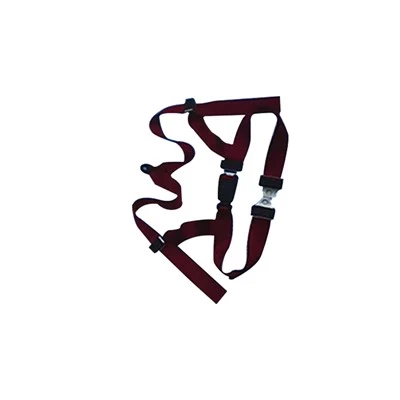
Let’s start with the obvious: a truck’s cab is nothing like a car’s. A car’s seatbelt is designed to fit a driver sitting upright in a small enclosed space, but a long-haul truck driver sits for 8, 10, even 14 hours a day, often adjusting their position slightly to reach controls, navigate rough terrain, or just get comfortable enough to stay alert. Cheap, ill-fitting seatbelts are either so short they yank tight every time a driver leans forward, or so long they drag on the cab floor, get caught on pedals, or slack so much that they don’t do their job in a crash. But before we get to why measurement matters, let’s talk about how we actually measure a truck seatbelt—because it’s not just pulling out the webbing with a tape measure and calling it a day. That’s the mistake so many people make, and it’s the reason we’ve had to rework 100+ orders over the years.
First, there’s two key measurements we use for every seatbelt we manufacture: the “extended length” and the “effective length.” They sound similar, but they’re worlds apart, and if you mix them up, you’ll end up with a seatbelt that’s either too short to use or too long to be safe. Let’s break them down.
Extended length is the total amount of seatbelt webbing that’s available when the belt is fully extended, not under tension, and not attached to anything except the retractor, which is the spring-loaded box that lives in the B-pillar, seat base, or behind the seat in a truck cab. To get this number, you start by mounting the retractor in a fixed, level position—exactly how it would be installed in a real truck, because the angle of the retractor affects how much webbing it lets out. Then, you undo the latch plate (that metal or plastic piece you click into the receiver) and pull the webbing out slowly, making sure not to let it bunch or twist, until it stops—this is when the retractor has reached its full extension limit, the point where it can’t let out any more webbing without being overstretched. You measure from the base of the retractor (where the webbing feeds out) to the very end of the free webbing, not including the latch plate. For most standard long-haul truck driver seatbelts, that extended length is somewhere between 90 and 120 inches, depending on whether it’s a single-seat driver belt or a dual seatbelt for a passenger.
But here’s the part most people miss: effective length. That’s the measurement that actually matters for safety and comfort, and it’s what we base all our orders on. Effective length is the distance from the retractor’s webbing outlet to the point where the latch plate engages with the receiver when the driver is in their normal driving position. Wait—why is that different? Because when a driver is sitting properly, the webbing doesn’t pull straight from the retractor to the latch; it follows the curve of the driver’s seat, loops around the B-pillar, or crosses over the shoulder at a slight angle. That path adds a little bit of length, but more importantly, it’s the length that the driver actually uses when they’re sitting, adjusting, or moving. If you only measure extended length, you might get a 100-inch belt that’s too short for a driver who leans forward to reach the radio, but a 110-inch effective length belt that fits perfectly.
We’ve had a test we do at our warehouse all the time to prove this. Last year, a small fleet from Texas ordered 50 seatbelts, specifying they wanted “100-inch extended length” belts. When they installed them, every driver complained the belt was too tight—when they leaned forward, it pulled their shoulder forward so much they couldn’t reach the steering wheel. We asked them to send over one belt, and when we measured effective length, it came out to only 82 inches. That’s because the driver’s normal driving position means the webbing only needs to stretch 82 inches from retractor to latch, not the full 100 inches of extended length. Turns out, they’d misread their old belt’s measurement, which was actually worn out and stretched, so they ordered a replacement that matched the worn length, not the actual correct size. We swapped all 50 for belts with an effective length of 92 inches, and they wrote back a week later saying it was like having a new truck. That’s the difference between knowing how to measure and guessing.
Now, there’s a second part of measurement that almost no one talks about, but it’s critical for DOT compliance: strap width and thickness. Truck seatbelts aren’t all the same width—car seatbelts are 1 inch wide, but most heavy-duty truck seatbelts are 1.5 inches wide, because they need to distribute the force of a crash over a larger area, reducing injury to the driver’s chest and shoulder. The thickness matters too: we use high-tensile polyester webbing that’s 0.08 inches thick, which can withstand up to 5,000 pounds of force, the minimum required for FMVSS 209 (the Federal Motor Vehicle Safety Standard for seatbelts). If you get a belt that’s thinner or narrower, even if the length is right, it won’t pass inspection, and it won’t protect the driver in a crash. I once had a driver tell me he replaced his seatbelt with one he bought at a truck stop for half the price—when we measured it, the webbing was only 1 inch wide, and could barely hold 2,000 pounds before tearing. He never used it again, but it was a close call when he got into a fender tilt on I-40 last year.
So, let’s say you’re a fleet manager or owner-operator, and you need to get the right length seatbelt. How do you do it without guessing, especially if you have drivers of different heights or driving positions? Here’s the step-by-step process we give every customer when they place an order, and it’s saved hundreds of us from returns and saved drivers from bad fits.
First, gather your tools: a soft tape measure (the kind tailors use, not a rigid yardstick—you need something flexible to follow curves), a piece of paper, and a pen. You’ll need a helper, because trying to measure a seatbelt by yourself leads to wonky numbers.
-
Prep your cab: Make sure the seat is in its normal driving position—slide it forward or back so it’s where the driver sits every day, don’t adjust it for someone taller or shorter unless that’s the average driver. Put the seat back at the normal recline angle, too—most drivers sit at a 100 to 110 degree angle, not straight up. Turn off any retractor locks so the belt can move freely; some trucks have a safety feature that locks the belt when you pull it fast, so pull it slow to make sure it can extend all the way.
-
Find the retractor outlet and the receiver: The receiver is where you click the latch plate in, usually on the B-pillar or the side of the seat base. The retractor outlet is where the webbing comes out of the retractor box. For passenger seatbelts, there might be two webbing outlets: one for the shoulder belt and one for the lap belt, so measure both separately.
-
Measure the effective length: Have your helper hold the soft tape measure at the exact point where the webbing comes out of the retractor. Then, follow the path the webbing takes when it’s being used: if it loops around the seat, follow that curve with the tape, don’t stretch it straight. Bring the tape to the point where the latch plate clicks into the receiver. Write that number down—this is your effective length, and this is the number you should use when ordering.
-
Double-check the extended length: If you want extra adjustability, pull the webbing all the way out slowly, without stretching it, and measure from the retractor outlet to the end of the webbing. Make a note of that too—if you have a driver who likes to sit back further, they might need a belt with a longer extended length, but their effective length will still be the shorter, used measurement.
One thing we always emphasize: never go by old seatbelt length. Webbing stretches over time, especially if it’s exposed to extreme temperatures (like the heat in a truck cab in Arizona, which can make webbing stretch by up to 5% every year) or heavy use. A 10-year-old belt that measures 100 inches effective might be stretched to 108 inches, so if you order a new 100-inch belt to replace it, you’ll end up with something that’s too short, because the old one was worn out.
Now, why does all this matter beyond just fit? For drivers, a properly measured seatbelt isn’t a luxury—it’s a way to stay safe on the road. The National Highway Traffic Safety Administration (NHTSA) reports that seatbelts reduce the risk of fatal injury for front-seat passenger vehicle drivers by 45%, but for heavy truck drivers, that number is even higher, around 60%, because of the extra force from a big rig’s weight. A too-tight belt can cause rib injuries or restrict movement in a crash, while a too-loose belt can let a driver be thrown forward, hit the steering wheel, or even be ejected. For fleets, compliant seatbelts mean avoiding DOT fines—failure to have working, properly fitting seatbelts can result in a $448 per vehicle fine, and multiple violations can add up fast.
We’ve worked with over 200 fleets across the U.S. and Canada, from small owner-operator groups with 5 trucks to big freight companies with 10,000+ units. Every time we start a new order, we ask for that effective length measurement, because it’s the only number that translates to real-world use. Last year, a fleet from Ontario had a problem where their drivers were complaining of shoulder soreness after long hauls, even though their seatbelts “met specs.” We went through their measurements and found they’d been ordering extended length instead of effective length, so their belts were too short, pulling tight across the shoulder every time they turned or leaned. We switched their orders to effective length, and within 6 months, their workers’ comp claims for shoulder injuries dropped by 30%. That’s the kind of impact getting a measurement right has.
I know ordering parts for a truck can feel like a headache—there’s so many numbers, specs, and terms that it’s easy to mix things up. But seatbelts aren’t something you want to get wrong. They’re the last line of defense if something goes wrong on the road, and a little time spent measuring correctly can save lives, save money, and keep drivers comfortable during those long hauls.
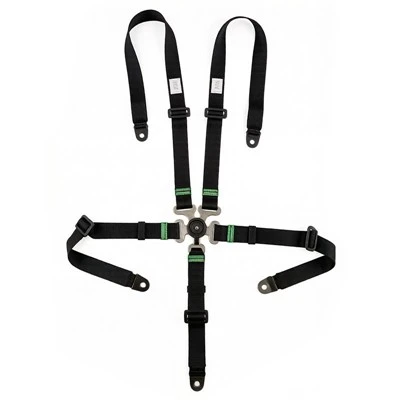
If you’re looking to replace worn seatbelts, outfit a new fleet, or just get a better fit for your drivers, don’t guess at measurements. Reach out to our team, and we can walk you through the exact steps to measure your truck’s seatbelts, answer any questions about length, webbing material, or DOT compliance, and help you find the right seatbelts for your needs. We’re here to make sure every driver hits the road with a belt that fits, works, and keeps them safe.
GM Seatbelts References
Federal Motor Vehicle Safety Standard No. 209: Seat Belt Assemblies
National Highway Traffic Safety Administration. (2022). Seat Belt Use: Heavy Truck Drivers and Passengers
Truck Safety Coalition. (2021). Long-Haul Driver Comfort and Safety: The Role of Vehicle Components
Yangzhong Weian Mechanical and Electrical Co., Ltd.
As one of the most professional truck seatbelt manufacturers and suppliers in China, we’re featured by quality products and good service. Please rest assured to wholesale truck seatbelt in stock here and get quotation from our factory. Customized orders are welcome.
Address: Group 10, Xinhua Village, Xilaiqiao Town, Yangzhong City; West of The Bus Terminal On Yuanqu Avenue.
E-mail: hfsaml_2008@qq.com
WebSite: https://www.weianseatbelt.com/
