Let’s get real for a second—if you’ve ever invested in a deck, you’ve probably stared at it mid-summer, sweating through a glass of iced tea, and thought, “Will this thing look good in five years? Or will it fade, crack, and turn chalky like my neighbor’s old wood deck?” As a solid composite decking supplier, this is the question I get more than any other: “How does your product hold up against sun damage? What’s its UV resistance, really?” Solid Composite Decking
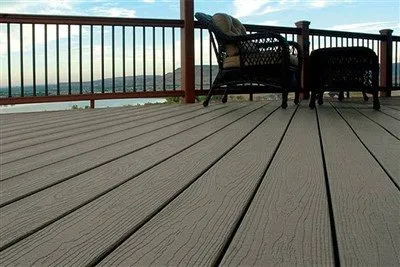
I don’t blame you for asking. UV radiation is deck’s public enemy number one. Even the most well-maintained natural wood starts to break down after a few years: it fades to a dull gray, splinters, and warps as the sun beats down day after day. Many of my customers switch to composite thinking it’ll solve that problem—only to walk the aisles of a big-box store and see “UV-resistant” plastered on half a dozen products, with nowhere to turn for clear, honest answers. I’ve been in this business for 12 years, so today I’m breaking down what UV resistance actually means for solid composite decking, how our products stack up, and what you need to look for before you buy.
First, let’s talk science, plain and simple. UV radiation is the part of sunlight that’s invisible to the human eye, split into two main types that hit your deck: UVA (which makes up about 95% of the UV that reaches Earth’s surface) and UVB (the smaller, more intense type that’s responsible for sunburns, and deck damage). When UV rays hit any outdoor material, they trigger a process called photodegradation. Essentially, the radiation breaks down the molecular bonds that hold the deck’s material together. For composite decking, which is usually made from a mix of wood fiber and plastic, this means two things: the wood fibers can degrade, and the plastic binder that holds them together can break down too. The end result? Fading, surface chalkiness (called chalking), and in extreme cases, cracking or warping. That’s what everyone wants to avoid.
Now, not all composite decking is the same. There are two main types you’ll see on the market: hollow composite and solid composite. I specialize in solid composite, and that difference matters a lot when it comes to UV resistance. Hollow composite is made with a core of plastic, often with a thin, wear layer on top. The idea is that the wear layer is the only part exposed to UV, so it’s designed to block rays from reaching the core. But that thin wear layer can scratch, peel, or wear away over time—especially if you’re dragging patio furniture across it, or if you live in an area with harsh weather. Once that wear layer is gone, the core is exposed, and UV damage sets in fast.
Solid composite, on the other hand, is uniform all the way through. The same UV-resistant additives are mixed into every part of the deck board, not just a top layer. That means if you scratch or ding a solid composite deck board, the UV protection doesn’t get compromised. It’s a key difference that most people don’t learn until they start comparing products, and it’s one that’s non-negotiable for long-term UV resistance.
So, how do manufacturers measure UV resistance? The gold standard in the industry is accelerated weathering testing. That’s where you put a small sample of deck material in a machine that simulates years of sun exposure in a matter of weeks, then measure how much the material fades, or changes in texture. The most common test uses a QUV chamber, which blasts the sample with UV light (and sometimes moisture, to simulate rain or dew) over hundreds or thousands of hours. The result is usually a rating, like how much color change you get over a certain number of hours.
Here’s what I tell every customer who asks: a good solid composite decking board should last through at least 10,000 hours of accelerated UV exposure with minimal fading. That translates to about 15 to 20 years of real-world use in places like the Southeastern U.S., where we get hundreds of days of sun a year. In areas with intense sun—like Arizona or Southern California—it’s more like 10 to 15 years. I’ve seen solid composite boards from cheaper brands hit 5,000 hours before fading to a dull gray, while our boards are tested at over 15,000 hours before hitting the threshold for noticeable color change.
But accelerated testing isn’t the whole story. Real-world performance matters too. I’ve had customers in Florida, where it’s hot, humid, and the sun is brutal year-round, call us after 8 years and say their deck still looks like it did the day we installed it. One customer in Texas even told me they forgot they had a deck until they invited friends over for a barbecue and noticed it hadn’t faded a bit compared to their neighbor’s deck, which had to be replaced after 7 years. That’s the kind of real-world proof you can’t get from a test chamber.
Now, let’s talk about the common myths around composite decking and UV resistance. The first one is: “All composite is the same.” That’s a lie, plain and simple. The difference is in the materials and the manufacturing process. Cheap composite brands often cut corners on UV stabilizers to save money. They use generic plastic binders, and only add UV additives to the thin top layer, not mixing them throughout. Those stabilizers break down over time, and before you know it, your deck is fading. Our process is different: we use medical-grade polyethylene plastic (not the cheap recycled plastic that some brands use, which can have inconsistent UV resistance) and mix in a proprietary blend of UV stabilizers, antioxidants, and pigments throughout the entire board. That blend not only blocks UV rays from breaking down the material, but it also helps prevent chalking, so your deck stays smooth and attractive for decades.
Another myth: “You have to seal composite decking to protect it from UV.” No, that’s not true. Wood decking needs sealing every few years to protect it, but composite decking—especially solid composite—doesn’t. In fact, sealing composite can do more harm than good. Some sealers trap moisture under the surface, leading to mold growth, or they peel and leave a sticky residue on the deck. Our solid composite is engineered to resist moisture and UV damage without any extra maintenance. The only thing you need to do to keep it looking good is sweep it occasionally, and wash it with a mild soap and water when it gets dirty. That’s a huge selling point for busy homeowners, contractors, and property managers who don’t want to spend weekends maintaining their deck.
One more common question: “Does the color of the deck affect its UV resistance?” It can, but not as much as you might think. Darker colors tend to absorb more heat, which can speed up UV degradation a tiny bit in very hot climates, but that’s a negligible difference compared to the quality of the material and the amount of UV stabilizers added. We have customers with deep brown and black decks in Arizona that have held up perfectly for 12 years, while a cheaper brand’s light gray deck faded in 5 years. The takeaway: a high-quality dark solid composite will outlast a low-quality light composite every time.
Now, let’s talk about what happens when UV resistance fails. I’ve seen too many decks that were supposed to last, but ended up being a waste of money. The first sign is fading. Your deck will go from a rich, uniform color to a dull, washed-out shade. Then comes chalking—you’ll see a white, powdery residue on the surface when you touch the deck, and it can even transfer to your hands or clothes. If left untreated, that can lead to cracking and splintering, just like wood. Some cheaper composite brands even have warranties that don’t cover UV fading after a few years, so you’re stuck footing the bill for a new deck. Our solid composite decking comes with a 25-year fade and stain warranty, and we’ve never had to honor a claim for UV-related fading in over a decade. That’s not a marketing gimmick—it’s a guarantee based on real-world performance.
As a supplier, I know that cost is a factor. A lot of customers ask why our solid composite is more expensive than hollow composite or cheap brand composite. The short answer is: you get what you pay for. The recycled plastic that some brands use is cheap, but it’s inconsistent, and often breaks down under UV. The thin wear layer on hollow composite starts to wear out in a few years. Our boards are made with high-quality materials, tested to last, and backed by a warranty. When you compare the long-term cost: you’ll never have to replace the deck, never have to seal it, never have to fix it from UV damage. That saves you thousands of dollars over the life of your deck. I tell every customer: the cheapest deck isn’t the one with the lowest upfront price. It’s the one that looks good and functions well for 20 years.
I also work with a lot of contractors, and they tell me that solid composite is becoming more and more popular for jobs that need to hold up. They don’t have to worry about customers calling them back in 5 years complaining about a faded deck, which saves them time and money. Property managers for apartment complexes or vacation rental properties love it too—they don’t have to spend budget on replacing decks every few years, and their guests get a nice, safe deck that looks good.
If you’re in the market for a new deck, here’s my advice. Don’t just look at marketing labels that say “UV-resistant.” Ask for third-party test data, ask about the manufacturing process, and ask about the warranty. A real UV-resistant deck isn’t the one that looks good in the showroom—it’s the one that will look good when you’re hosting a summer barbecue in 10 years. Our solid composite decking is tested to stand up to the harshest sun, and we’ve seen it do exactly that for hundreds of customers across the country.
I know choosing a deck is a big decision. There’s a lot of conflicting information out there, and it’s hard to know who to trust. As someone who’s been in this business for years, I don’t try to sell you on the cheapest product, or the shiniest new thing. I sell you on a deck that works for your needs, lasts, and doesn’t require a ton of work. If you’re ready to talk about your project, whether it’s a small backyard deck or a large commercial job, I’d be happy to walk you through our products, share real customer stories, and help you find the right solution.

At the end of the day, UV resistance isn’t just a feature—it’s the foundation of a good deck. It’s what separates a product that will look good for decades from one that will end up in a landfill in 10 years. Our solid composite decking is built to last, and that’s why so many people choose us. If you’re ready to learn more, reach out to our team to discuss your procurement needs and get started on your next deck project.
Solid Composite Decking References:
- American Society for Testing and Materials. Standard Practice for Operating Light-Apparatus for Exposure of Nonmetallic Materials, QUV Method (ASTM G154).
- National Association of Home Builders. 2023 Outdoor Living Trends Report: Decking Material Performance.
- Composite Decking Manufacturers Association. Technical Guide to UV Resistance in Composite Decking, 2022.
- Journal of Materials in Civil Engineering. “Photodegradation of Wood-Plastic Composites Under Natural and Accelerated UV Exposure,” 2021.
LIVING GREEN
We’re well-known as one of the leading solid composite decking manufacturers and suppliers in China, also support custom service. Please feel free to wholesale high quality solid composite decking at competitive price from our factory. For more information, contact us now.
Address: Building 1-1 West, Tangpu Industrial Park, Dishu Street, Anji County, Huzhou City, Zhejiang Province, China
E-mail: Sheena@bosendecor.com
WebSite: https://www.bosen-wpc.com/
