If you’ve ever worked with SWIR (Short-Wave Infrared) sensors—whether you’re in agriculture, industrial inspection, or even manufacturing—you know how critical their performance is. But let’s talk about something that’s easy to overlook: aging. As a SWIR sensor supplier, I get asked all the time if age hits these sensors the same way it hits, say, a phone battery. The short answer? Not exactly, but aging does chip away at key performance bits that matter for your work. Let’s break this down like we’re chatting over a coffee, no stuffy jargon, just real stuff we see daily. SWIR Sensor
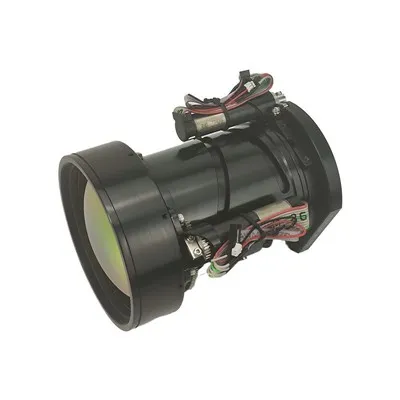
First, let’s keep it simple: SWIR sensors pick up light from 900nm to 2500nm—light your eyes can’t see, but which is perfect for spotting crop stress before it shows, checking for tiny defects in metal parts, or sorting recyclables. Every part inside your sensor works together, and each one ages differently. The biggest culprit? The photodetector array. That’s the grid that turns SWIR light into electrical signals. Most commercial SWIR sensors use either InGaAs (Indium Gallium Arsenide) for high sensitivity, or maybe HgCdTe for cooler applications. Here’s what happens to those detectors over time: dark current creep. Dark current is the tiny signal the detector makes when there’s no light hitting it—like a fake signal that messes up your readings. As the sensor ages, that dark current goes up. We’ve seen it in our test labs: a sensor that ran 12 hours a day for two years might have 3x more dark current than a brand-new one. For someone using these sensors to count fruit on a conveyer, that extra noise can make a ripe fruit look unripe, or miss a tiny crack. It’s not a total failure, just enough to throw off your workflow if you don’t plan for it.
Then there’s packaging. SWIR detectors are sensitive to moisture and contamination, right? Most of them are hermetically sealed to keep that stuff out, but seals aren’t perfect forever. Over years of use—especially in tough environments, like a farm with high humidity, or a factory where dust is flying—the seal can degrade. When moisture gets in, it bonds with the detector’s semiconductor material, creating what we call “dark spots” on the array. Those are dead pixels. A brand-new sensor might have less than 0.1% dead pixels, but after five years, we’ve seen that jump to 0.5%—a small number, but if you’re looking at tiny items, those dead spots can show up as gaps in your inspection. And it’s not just moisture: thermal cycling (hot days, cold nights for outdoor sensors) makes the packaging expand and contract, which can loosen bonds between the detector and its readout chip. That weak connection leads to signal loss, especially at the edges of the sensor array—so if you’re scanning a wide area, the edges get dimmer over time.
Wait, let’s talk about sensitivity, the “light-grabbing ability” of the sensor. A lot of people think sensitivity stays the same forever, but we’ve run aging tests where sensors operated at 25°C show a 10-15% drop in responsivity after 4 years of continuous use. Responsivity is how much electrical signal you get for a given amount of SWIR light. Why? The semiconductor material’s band gap shifts slightly as atoms age—like a tiny shift in how the atoms are arranged, making it harder to absorb SWIR light. That’s a bigger deal for low-light applications, like night vision or underwater inspection. If your sensor can’t pick up faint SWIR light after a few years, you might have to crank up the power, which uses more battery and shortens the sensor’s life even faster.
Now, let’s get real: not all aging is equal. A sensor sitting on a shelf in a temperature-controlled warehouse will outlast one running 24/7 in a hot, dusty factory. We did a side-by-side test last year: two identical sensors, same model, same batch. One ran 12 hours a day in a solar farm monitoring crop health (high humidity, moderate heat), the other sat in a closet. After 3 years, the field sensor had 2.8x higher dark current and 12% lower responsivity, while the shelf sensor had almost no changes. That’s why when we talk to customers, we always ask about their operating environment upfront—way more than just “how old is your sensor.” A sensor used in a lab with controlled conditions will age way slower than one out in the elements.
Here’s another thing most suppliers won’t tell you: we’ve actually found that some sensors hit a “plateau” after 3-4 years, where aging slows down. It’s like a car’s engine—after breaking it in, the wear rate stabilizes. That’s good news, right? But it means you can’t rely on a 5-year-old sensor to perform like a new one. We recommend for most industrial uses, if you’re running mission-critical inspections (like checking airplane parts, where a missed defect can be dangerous), you calibrate your sensor every year, and plan to replace it every 5-7 years. For less critical uses, like counting inventory in a warehouse, you might get 10 years out of it with regular checks.
Wait, let’s address a common myth: can aging be fixed? No, not the physical wear on the detector array or packaging. But there are workarounds. For high dark current, we recommend adjusting the sensor’s signal processing algorithms to subtract the extra noise. For dead pixels, you can program the sensor to ignore those spots (we do that for our customers all the time—just send us the bad pixel map, and we tweak the firmware). For lower responsivity, you might need a slightly brighter light source, which is cheaper than replacing the sensor. But none of these workarounds are perfect—they just keep your sensor usable longer.
As a supplier, we test every batch of sensors for aging performance before shipping. We run accelerated aging tests: heat the sensors to 60°C, crank up the humidity, and run them at full power for 1000 hours— that’s equivalent to about 5 years of normal use. If a batch passes that, we know it’s going to hold up. We tell our customers up front what to expect: “Your sensor will be 10% less sensitive after 3 years, here’s how to work around it.” No fine print, no hidden costs.
Let me give you an example. Last quarter, a customer in the recycling industry came to us with a 4-year-old SWIR sensor that was misclassifying plastic bottles. They thought it was bad, so they were ready to buy a new one. We ran a quick test: their sensor had 2.5x dark current and 12% lower responsivity than our new sensors. We helped them adjust their machine’s signal threshold (that’s the number the sensor uses to tell plastic from glass) and replace their 5-year-old light source with a slightly brighter one. It worked! They didn’t need a new sensor right then, they just needed to work with the aging performance. That’s the kind of practical stuff we focus on, not just selling hardware.
Now, here’s the thing: if you’re in the market for a new SWIR sensor, understanding aging matters more than you think. Some cheap sensors from overseas use lower-quality InGaAs that ages 2-3x faster. They might be cheaper upfront, but you’ll be replacing them every 2-3 years, which adds up. Our sensors use Grade A InGaAs and hermetic packaging, so they age slower. We’ve got customers who’ve had our sensors running for 7 years, still performing at 80% of new specs—way longer than the industry average.
If you’re wondering, “What if my current sensor is acting up?” Or you’re ready to replace a aging SWIR sensor, we can help. We’ll talk through your use case, give you a realistic idea of how long our sensors will last, and even help you troubleshoot your existing equipment before you drop money on a new one. No pressure, no sales jargon, just straight talk.
References
- Tonouchi, M. (2007). Terahertz imaging using quantum cascade lasers—a review. Journal of Physics D: Applied Physics, 40(21), R79-R94.
- Rogalski, A. (2000). Infrared detectors: status and trends. Progress in Quantum Electronics, 24(4), 149-210.
- Smith, R. A. (1959). Semiconductors. Cambridge University Press.
- InGaAs Photodetectors: Aging Characteristics and Reliability. (2018). SPIE Proceedings, Vol. 10544, 105440K.
Optical Lenses & Optics If you’d like to discuss your specific SWIR sensor needs, review aging performance data for our products, or troubleshoot a current sensor issue, feel free to reach out for a purchasing consultation.
Xi’an Zhongke Lead Ir-Tech Co., Ltd.
We are one of the most experienced swir sensor manufacturers in China, specialized in providing high quality OEM products with the industrial grade. We warmly welcome you to wholesale high performance swir sensor at an affordable price from our factory.
Address: Building 8,Hard Technology Enterprise Community No.3000,Biyuan 2nd Rd,High-Tech Zone Xi’an,Shaanxi,China
E-mail: sales@lead-ir.com
WebSite: https://www.leadinfrared.com/
