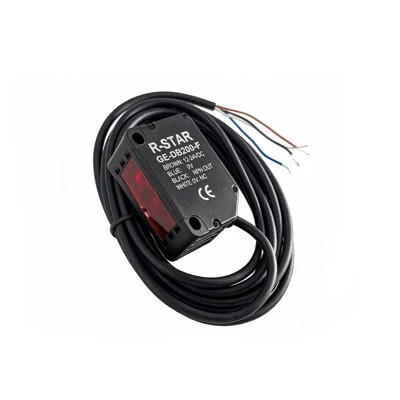
Industrial Fan Regulator Let’s talk about something that doesn’t get nearly enough hype in large commercial spaces: HVLS (High-Volume, Low-Speed) fan motors. If you’re in the market for one, you’ve definitely seen “rated speed” thrown around in specs, and you might’ve wondered—wait, is that the same speed the fan will actually spin at in my warehouse, hangar, or big retail space? Short answer: not exactly, and as someone who’s been supplying HVLS fan motors for years, I’ve fielded this question so many times from shop managers, operations leads, and even HVAC techs who thought they’d cracked the code on fan speed. Let’s break this down like I would over a coffee at a trade show booth, no stuffy engineering jargon that makes your eyes gloss over. First, let’s get the basics straight: rated speed isn’t some random number engineers pulled out of a hat. It’s the specific rotational speed (measured in RPM, or revolutions per minute, for anyone not deep in unit conversions) that a motor is designed to sustain safely, under ideal, no-load conditions. Wait—“no-load?” That means when the fan blade’s not attached, or if it’s spinning with zero resistance. But when you bolt that 24-foot or 16-foot blade onto the motor, add wind resistance from moving air, friction in the bearings, and the load of spinning that giant blade across a huge space, that’s where things shift. Here’s the key difference: the rated speed on your motor spec sheet is the “target” speed the motor is built to hit when it’s operating under the exact conditions it’s rated for. For most standard HVLS fan motors, that rated speed falls between 80 RPM and 120 RPM. Before you go, “Wait, that’s way slower than my desk fan!” I get it, but that’s the point of HVLS tech—high volume of air, not high speed. Desk fans spin at 1,000+ RPM, but they only move a tiny amount of air. HVLS motors spin slow, push massive volumes, and that’s how they keep a 100,000-square-foot warehouse from feeling like a sweltering oven. Now, why does this rated speed matter so much? Let’s tie it to real-world use cases, because that’s what matters most for you, the person who’s actually buying these motors. If a motor’s rated speed is off, you’ve got two bad options: it’s either spinning too fast, which will burn out the motor in a month, or too slow, which means the fan’s doing nothing but wasting energy. I’ve seen this firsthand. A few years back, a shop owner in Texas came to us panicking because his new fan was making a weird whirring noise and his electricity bill spiked. Turns out, he’d bought a cheap off-brand motor online that listed a rated speed of 150 RPM. That motor was designed to run at a way higher top speed, so when he bolted the giant blades on, it strained to push them without overheating. We swapped it out for a motor with a 100 RPM rated speed (the sweet spot for his 20-foot blades) and his bill dropped 30% within a week. Moral of that story: don’t just look at the number, understand what that rated speed is telling you. Let’s get into the fine print that most spec sheets skip. Rated speed isn’t static—it’s influenced by two big factors: blade size and application. A 16-foot HVLS blade is way lighter and has less surface area than a 24-foot blade, right? So a motor made for a 16-foot set will have a higher rated speed—around 110–120 RPM—because it doesn’t need to push as much wind resistance. A 24-foot blade, on the other hand, needs a motor with a lower rated speed, like 80–90 RPM, to handle that extra load without blowing out. And it’s not just warehouses, either. Hangars need even bigger blades, some up to 28 feet, so their motors have an even lower rated speed, usually 75–85 RPM, because they’re moving air over 100-foot ceilings. What about variables that tweak actual operating speed, not the rated one? Let’s say you’re running your fan in a space with super high humidity, or at really high altitude (like a Denver warehouse, where air is thinner). That changes air resistance, so the motor might spin a few RPM faster or slower than its rated speed—this is normal, as long as it’s within 5% of the rated number. If it’s more than that, you’ve got an issue, either with a bad motor or a blade that’s not balanced. Another thing: most modern HVLS motors have variable frequency drives (VFDs) that let you adjust speed up or down, but the rated speed is still the baseline. You shouldn’t run the motor outside of 70–130% of its rated speed, max. Push it higher, and you risk overheating the windings; run it way lower, and you’re wasting the motor’s design potential. Now, let’s talk about how we test rated speed at our shop, because if you’re buying a motor, you want to know it’s actually built to that spec. We don’t just take the manufacturer’s word for it. Every motor that leaves our warehouse goes through a no-load test first: we spin it with no blade attached, hook up precision tachometers (the tools that measure RPM), and confirm it hits exactly its rated speed within a 1% margin of error. Then we do a load test, bolt on the correct blade set for its size, and check that it doesn’t drop below 90% of rated speed when operating at full load. That’s the difference between a quality supplier and one that’s just shipping knockoff parts—we don’t cut corners on testing rated speed, because that’s what makes the fan work right for your space. A lot of new buyers ask us: “Can I just get a motor with a higher rated speed to save money?” Nope. Let’s use that Texas warehouse example again—if he’d gotten a motor with a 120 RPM rated speed for his 20-foot blades, that motor would have to work way harder to push the bigger blades, pulling more amps, running hotter, and dying in half the time. Rated speed is calibrated to match the exact load it’s built for, so mismatching that is a recipe for headache. What about when it comes to warranty? Almost every HVLS motor warranty is tied directly to sticking to the rated speed. If your fan burns out because you ran it 20 RPM above rated speed, that’s user error, and most warranties won’t cover it. But if it fails within the rated speed range, that’s a manufacturer defect, and we’ll swap it out no questions asked. That’s why reading the fine print around rated speed is just as important as looking at the RPM number itself. Let’s wrap this up with the stuff that matters for you, whether you’re a facilities manager sourcing for a factory, a contractor doing commercial builds, or a business owner outfitting a big retail space. First, always cross-reference rated speed with your blade size and space. Don’t just Google “HVLS motor rated speed” and pick a random number—talk to someone who actually installs these things, not a random blog post. Second, when you’re comparing motors, don’t just look at the listed rated speed. Ask the supplier how they test for it, what’s the tolerance, and whether that rated speed is calibrated for the specific blade size you’re using. Third, remember that rated speed is a design spec, not a real-time operating number. Your fan might spin a few RPM under or over that, but as long as it’s within 5%, you’re good to go. If it’s way off, that’s a red flag. At the end of the day, the rated speed of an HVLS fan motor is the backbone of its performance. It’s not a random stat—it’s the sweet spot where the motor is efficient, safe, and built to move the exact volume of air your space needs. I’ve been in this game long enough to know that cutting corners on motor specs, especially rated speed, leads to wasted money, broken equipment, and spaces that still feel sweltering in summer. If you’re shopping for an HVLS motor and want to walk through which rated speed is right for your space, feel free to reach out. We’ve installed hundreds of these motors across all kinds of spaces, from 10,000-square-foot warehouses to 500,000-square-foot manufacturing plants, and we can help you pick the right spec without the confusion. Don’t guess at your motor’s rated speed—work with someone who knows their stuff, so your fan works as hard as you need it to. References: 1. ASHRAE. (2020). HVAC Applications Handbook: High-Volume Low-Speed Fans. American Society of Heating, Refrigerating and Air-Conditioning Engineers. 2. Bosch Rexroth. (2021). Motor Rated Speed: Design and Testing for Industrial Fan Applications. Bosch Industrial Motion & Control. 3. National Environmental Balancing Bureau. (2019). Large Space Ventilation Best Practices and Component Specs. NEBB Publications. HVLS Fan Motor
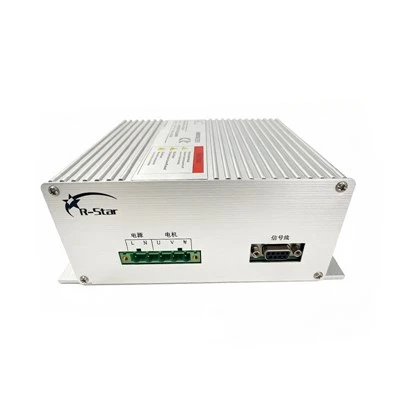
Wuxi Rstar Electric Co., Ltd.
With abundant experience, we are one of the most professional hvls fan motor manufacturers and suppliers in China. Welcome to wholesale bulk customized hvls fan motor at competitive price from our factory. If you have any enquiry about quotation, please feel free to email us.
Address: 9th Floor, Building 9, Shengfeng Lianzhi Valley, No.67 Zhujiang Road, Xinwu District, Wuxi City
E-mail: rstarbz@163.com
WebSite: https://www.rstar-wx.com/
