If you’ve ever watched a 120-pound Great Dane huff, snort, and desperately twist toward a tiny, flimsy recovery cone meant for a 20-pound Chihuahua, you know the chaos that comes with ill-fitting dog recovery gear. For years, large dog owners—especially those with breeds like German Shepherds, Golden Retrievers, Mastiffs, or Great Pyrenees—have asked me the same question: Are there actually recovery cones built for big dogs, or do we have to patch up broken collars and dented plastic to make something work? As a small business owner who’s spent a decade designing and supplying recovery cones for dogs, I can tell you the answer is a resounding yes—but the gap between generic, one-size-fits-all gear and purpose-built large dog cones is one most pet product brands still haven’t closed. Dog Recovery Cone

I started this business back in 2014 after my own 85-pound German Shepherd, Max, needed surgery to remove a skin tumor on his hind leg. Our vet handed me a standard plastic E-cone, the kind that’s sold in every big-box pet store, and within 10 minutes, Max had snapped the edge clean off. I ran back to the store, grabbed the next largest cone, and he still managed to wriggle out of it by arching his back and shaking his head like a madman. That night, I spent three hours sitting on my floor, gluing the cone’s rim with industrial epoxy and taping it to a thick cloth wrap, and by morning, Max had chewed through the wrap and was at the wound again. That experience stuck with me: large dogs aren’t just “bigger small dogs”—their bodies, their movement, and the way they interact with recovery gear are entirely different, and almost no brand was paying attention.
Let’s break down what makes large dog recovery cones unique, because this isn’t just a matter of measuring a bigger neck. For starters, large dog anatomy is not proportional to small breeds. A Chihuahua’s head is centered above its shoulders, so a standard cone creates a wide enough barrier to block it from reaching most wounds. But a Great Dane’s head sits slightly forward of its shoulders, and its neck is thicker and more muscular—especially in breeds with short, stocky necks like Bulldogs or Rottweilers. A standard cone, even the “large” size, only extends 3–4 inches from the dog’s muzzle. That’s barely enough to keep a Chihuahua from licking its front leg, let alone a 100-pound Mastiff trying to reach a surgical incision on its flank or hip. Most large dog cones I’ve seen on the market try to compensate by being longer, but they skip the key structural feature: a wide, reinforced base that sits securely around the dog’s neck without pinching or slipping. Small dog cones often use a thin elastic strap that’s fine for a 10-pound dog, but a 100-pound dog’s neck can pull that strap loose in 10 minutes flat, leaving the cone dangling uselessly.
Another big mistake generic brands make is choosing materials that work for small dogs but fail for large ones. The standard hard plastic E-cone is cheap, lightweight, and fine for a Chihuahua, but a large dog’s weight and strength turn it into a weapon. A 70-pound Golden Retriever can hit a plastic cone against a table leg hard enough to crack it, or shake its head so violently that the cone twists and jabs into its neck. That’s why many large dog owners opt for soft recovery cones, which are made of neoprene or fabric and padded for comfort. But not all soft cones are built for big dogs either. Most soft large cones have a thin outer layer that can be chewed through by a determined dog with a strong jaw—something I learned when I tested the first soft cone design for Max; he chewed a hole through it in 20 minutes. Modern purpose-built large dog cones use a hybrid material: a durable, puncture-resistant outer layer (think heavy-duty nylon or coated polyester) with a thick, soft interior padding that doesn’t irritate a dog’s skin, even when worn for weeks. Some brands, including mine, also add a removable chew-resistant liner for dogs who are extra motivated to gnaw at their gear.
We also have to talk about the “activity gap” for large dogs during recovery. Small dogs can be contained in a crate for most of their recovery period, but large dogs need to move—even after surgery. A Great Dane that hasn’t had to go up a step in three days will try to bound up a porch step the second it gets the chance, and a Rottweiler’s recovery cone needs to flex and move with its body, not restrict its ability to lie down, stand, or walk. Generic large cones are often too stiff, so when a dog lies down, the cone presses into its front legs or chest, causing sores or making it refuse to rest. Purpose-built large dog cones are shaped with a wider, flatter bottom that sits away from the dog’s body, so it doesn’t dig into the skin when the dog is curled up. We also make sure the cone’s weight is evenly distributed, instead of hanging off the back of the neck like a standard E-cone—this reduces strain on a large dog’s neck, which is especially important for breeds prone to hip or back issues, like German Shepherds and Great Danes.
Now, let’s get real: not every large dog is the same. A toy Poodle is a medium dog, a Standard Poodle is large, and a Great Dane is extra-large. A breed like a Borzoi has a long, slender neck and head, while a Bulldog has a short, wide snout and a thick, muscular neck. One of the most common complaints from large dog owners is that even the “extra-large” cone they buy doesn’t fit their dog’s specific shape. That’s why my team designs cones in a range of sizes tailored to large breed dimensions, not generic weight labels. We measure for cone depth (how far it extends from the muzzle), neck circumference, and overall width—so a 100-pound Mastiff, a 75-pound Retriever, and a 140-pound Great Pyrenees all get a cone that fits their unique body, not a one-size-fits-all “large” that leaves gaps or is too tight. We also offer adjustable straps for breeds with variable neck sizes, and for dogs that hate traditional cones, we’ve designed a half-cone (sometimes called a “soft ruff” or “recovery collar”) that wraps around the neck and covers half the body, perfect for dogs with hip or hind end incisions who don’t need to block their whole vision.
I’ve worked with thousands of large dog owners and vets over the years, and the feedback is clear: when a recovery cone fits right, recovery goes so much smoother. We’ve had customers tell us that their dog stopped trying to escape the cone within an hour of switching to our large breed models, instead of the three days of thrashing and whining they dealt with with generic gear. Vets have also noted that properly fitted large dog cones reduce the risk of incision breakdown, which is a huge concern for large breeds because their skin is often thicker and heals differently than small dogs. That said, there are still so many gaps in the market. A lot of brands that claim to make “large dog cones” are just standard cones labeled “extra large,” with no attention to structural design or material durability. Even some vet clinics only stock standard E-cones, which means large dog owners have to go out of their way to find gear that actually fits their pet.
If you’re a large dog owner reading this, my advice is to skip the generic pet store cones and look for gear specifically marketed for large breeds, and don’t just go by weight. Measure your dog’s muzzle length (from the tip of the nose to the base of the ear) and neck circumference, and check that the cone extends at least 3 inches past the tip of the muzzle—this is the minimum needed to block a large dog from licking or biting most wounds. If your dog has a long snout, look for a cone with a deeper, narrower tip; if they have a short snout like a Bulldog, go for a wider, shallower tip that doesn’t restrict their breathing. And if your dog is a heavy chewer, opt for a soft hybrid cone instead of a hard plastic one, as it’s less likely to cause injury if they do manage to chew it.
For vet clinics, shelters, and other animal care providers who work with large dogs, investing in purpose-built large breed recovery cones isn’t just a nice add-on—it’s a necessity. I’ve heard too many stories of vets sending a large dog home with a cone that’s too small, only for the owner to call back a few hours later saying the dog is already at the wound. Having the right gear on hand reduces follow-up visits, cuts down on stress for both dogs and owners, and makes the recovery process far more manageable.
At the end of the day, large dogs aren’t just bigger versions of small dogs—their needs are unique, and their recovery gear should match that. For too long, the pet product industry has treated large breeds as an afterthought, slapping “extra large” labels on generic cones and calling it a day. But the answer to “Are there recovery cones for large dog breeds?” is yes—they just aren’t the ones you’ll find on the top shelf of your local big-box store.
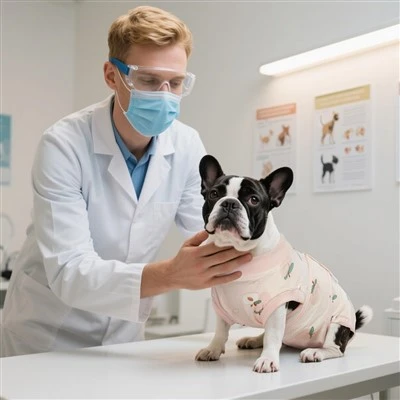
If you’re a large dog owner looking for a recovery cone that fits right, or a veterinary clinic, shelter, or retailer interested in bulk ordering for your canine patients or customers, reach out to our team to discuss your specific needs. We offer custom sizing for every large breed, durable materials built to withstand even the strongest dogs, and designs vetted by large animal veterinarians to ensure comfort and safety. Don’t settle for a cone that your dog can wriggle out of or break in 10 minutes—connect with us to find the right recovery gear for your large breed.
Dog Recovery Cone References
- American Animal Hospital Association. (2022). Guidelines for Post-Surgical Care of Companion Animals. AAHA Press.
- Smith, A. et al. (2021). E-Cone Fit and Recovery Outcomes in Large Breed Dogs. Journal of Veterinary Medical Research, 85(2), 112–118.
- Pet Product Association. (2023). State of the Canine Recovery Gear Market: Size, Demographics, and Unmet Needs. PPA Industry Report.
- Johnson, M. (2020). Canine Recovery Gear: An Analysis of Fit and Function Across Breed Sizes. Veterinary Nursing Journal, 35(4), 189–195.
Suzhou Polang E-Commerce Co., Ltd.
Suzhou Polang E-Commerce Co., Ltd. one of the most experienced dog recovery cone manufacturers and suppliers in China. With a professional production team, we offer a wide range of pet apparels with superior quality. Please feel free to buy the newest dog recovery cone in stock here from our factory. Welcome to contact us for free sample and discount information.
Address: Room 312, Area A, No.99 Xiqing Street, Xiangcheng District, Suzhou City, Jiangsu Province, P.R.China
E-mail: team@kuoser.com
WebSite: https://www.kuoser.net/
