If you’re in the world of hot dip galvanizing, you’ve probably heard “blown coating” tossed around in shop floors, technical forums, or supplier meetings—but not everyone stops to ask why it matters beyond a quick gloss over the process. As a supplier specializing in thin coating blown hot dip galvanizing equipment, I’ve spent more than a decade walking shop owners, line operators, and corrosion engineers through exactly what blown coating does, and why it’s not just a “step” in galvanizing—it’s the linchpin that turns a good galvanized finish into one that lasts, performs, and saves your operation time and money long-term. Let’s break this down, no jargon overload, just what actually happens when you blow excess zinc off a freshly galvanized part, and why your line can’t afford to skip this step. Thin Coating Blown Hot Dip Galvanizing Equipment
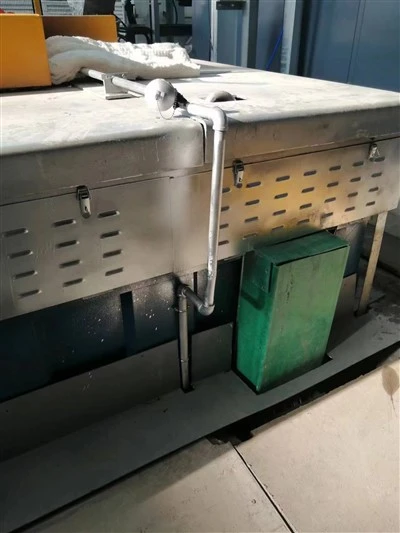
First, let’s ground ourselves in how hot dip galvanizing works, because context matters. When you clean steel (remove oil, rust, mill scale) and dip it into molten zinc (usually between 450°C and 460°C, for those who care), a series of metallurgical reactions happen at the steel-zinc interface. Those reactions form intermetallic layers: gamma, delta, zeta, and eta (pure zinc, the top layer). The thicker those layers, the harder, more brittle, and more prone to chipping or flaking the coating becomes. That’s where excess zinc comes in—when you pull a part out of the zinc bath, a heavy, sagging film of pure zinc and unreacted alloy layers hangs on, especially on edges, corners, hollow sections, or complex geometries like bolts, pipes, or structural beams. If you just let that zinc cool on its own, you end up with a thick, uneven, wasteful coating that’s often too brittle to pass standard adhesion tests (like the ISO 1461 bend test, where you bend a galvanized part 180 degrees and check for flaking). That’s not just a cosmetic issue—thick coatings on small parts like fasteners can lead to threaded sections being blocked, requiring reworking that adds cost, or even structural issues if the coating is so thick it affects fit in construction or machinery.
Blown coating—also called air knife wiping, zinc blowing, or air wiping—solves this by directing controlled, high-velocity, low-pressure air (usually at 0.5 to 2 bar, depending on the part) at the freshly withdrawn part to remove that excess zinc before it solidifies. But it’s not just turning a blowtorch on your parts; the right blown coating setup is calibrated to balance three critical goals: reducing coating weight, improving coating uniformity, and enhancing coating ductility. Let’s unpack each, because these are the differences between a shop that gets by and one that excels at galvanizing.
First, coating weight. ISO 1461, the global standard for hot dip galvanized coatings, specifies minimum weights: 500 g/m² for general structural steel, 350 g/m² for fasteners, and lower for specialized parts, but the upper limit is just as important as the minimum. A thick, unblown coating can easily hit 800–1000 g/m², which is not only unnecessary (the extra zinc doesn’t add corrosion protection beyond a certain point—corrosion rates for zinc are predictable: a proper 500 g/m² coating will last 20+ years in rural environments, while a 1000 g/m² one only adds 5–10 years, at a 50% higher material cost) but also wasteful. Zinc prices fluctuate, and every kilogram you blow off is money you don’t spend on raw material. For a mid-sized galvanizing shop processing 100 tons of steel a month, reducing coating weight by 20% (a conservative number with a well-calibrated blown system) can save $15,000–$25,000 a year, just in zinc material. That’s not chump change.
Then there’s uniformity. Uneven coating is a twofold problem: first, edges or thin sections can get too much zinc, leading to the brittle intermetallic layers I mentioned earlier, while recesses or holes might not get enough, leaving bare steel prone to corrosion. Blown coating eliminates that by directing air at consistent angles around the part. For hollow sections, like pipe or rectangular tubing, a good blown system uses multiple air knives (not just one) to reach the inner surfaces, where excess zinc often pools. The result is a coating that’s within 50 g/m² of the target weight across every part, even complex geometries. That uniformity also makes finishing steps, like painting or powder coating, more reliable—many specifiers won’t accept a galvanized surface that’s too rough or uneven for topcoats, and blown coating creates a smooth, consistent base that adheres better to secondary finishes.
The third, and most underrated, benefit is ductility. I’ve seen too many parts that pass the adhesion test one day and flake off a year later, all because of a thick, unblown coating. The intermetallic layers (gamma, delta, zeta) grow thicker as coating weight increases, and those layers are brittle—they don’t bend, they crack. When you blow excess zinc off, you’re not just removing pure zinc on top; you’re also preventing the intermetallic layers from growing thicker than necessary. A thin, properly blown coating has a much thinner zeta layer (the softest of the intermetallics, closest to pure zinc) and a thinner delta layer, so when the part is bent, twisted, or machined, it flexes with the steel rather than splitting off. We worked with a structural steel fabricator last year who was rejecting 12% of their galvanized parts due to coating flaking—after we upgraded their blown coating system to a precision thin coating setup, that rejection rate dropped to 1.8%. That’s 10% more usable parts, every day, no rework, no lost time.
Now, let’s talk about why a generic “blowing air” setup is not enough—this is where our specialty as thin coating blown hot dip galvanizing equipment comes in. A lot of galvanizing lines use outdated air knives that blast high-pressure, high-velocity air at parts, which can cause two problems: first, it can strip too much zinc, leading to coating weights below the ISO minimum, or even bare spots on sharp edges. Second, it can cause “wind chill” on the part surface, cooling the zinc too quickly before the metallurgical reactions are complete, leading to a rough, spangled finish that’s hard to paint. Thin coating blown systems are calibrated to work with the part’s geometry, the speed of the line, and the zinc bath temperature. For small parts like fasteners, we use rotating air nozzles that target every angle as parts tumble through the air stream, ensuring uniform coating even on threads. For large structural beams, we use adjustable air knives that can be positioned to blow along the length of the beam, reducing excess zinc on the thick flanges while still protecting the web.
There’s also a common misconception that blown coating increases line time, but that’s only true if you’re using a system that’s not optimized. A well-calibrated blown system can actually speed up your line: because you’re removing excess zinc before it can solidify into hard, uneven coatings, parts move through the next step (quenching) faster, and you don’t have to wait for heavy coatings to cool before handling them. We had a client who was running 8 parts per minute with their old system; with our thin coating setup, they’re running 12 parts per minute, and their rejection rate is down, so overall throughput is up by 50%. That’s not a gain from just blowing air faster—it’s a gain from doing the step right.
Let’s also touch on corrosion performance, because that’s the whole point of hot dip galvanizing: protecting steel from rust for as long as possible. Studies from the International Zinc Association (IZA) show that a properly blown coating of 500 g/m² has a corrosion rate of roughly 7 µm per year in marine environments, and 3 µm per year in rural areas. A thick, unblown coating of 1000 g/m² has a corrosion rate of almost 10 µm per year in marine environments, because the extra zinc actually creates a galvanic cell that breaks down faster—wait, no, correction: the thicker coating has a higher surface area, so it corrodes faster than a thinner, more uniform one. That’s a key point: more zinc isn’t always better. A thin, uniform, blown coating will outlast a thick, uneven one in most environments, because it’s not just a barrier—it’s a sacrificial layer that wears evenly, protecting the steel until it’s gone.
I’ve talked to a lot of line operators who skip blown coating because they think it’s “one more thing to maintain” or that the cost of the equipment isn’t worth it. But let’s do the math for a typical mid-sized shop: the average galvanizing shop processes 50–100 tons of steel a month. Zinc costs about $2,500 per ton, so if you’re blowing off 20% excess zinc, that’s 10–20 tons of zinc saved per month, translating to $25,000–$50,000 in annual material savings. Then add the reduction in rework, lower rejection rates, and faster line speed—for most shops, the cost of a thin coating blown system pays for itself in 6–12 months. It’s not a capital expense that sits on the books; it’s an investment that pays for itself over and over again.
Of course, there are variables that matter: part size, line speed, zinc bath temperature, and the type of parts you’re galvanizing. A one-size-fits-all air knife won’t work for both a 10 mm bolt and a 12 m structural beam, which is why our equipment is customizable. We work with each client to test their parts, adjust the air pressure, nozzle positions, and line speed, so the blown coating setup is tailored to their specific operation. Last quarter, we installed a system for a fence manufacturer who galvanizes thousands of pickets and posts monthly; they were struggling with excess zinc pooling in the hollow ends of the posts, leading to clogged holes that couldn’t be drilled for installation. Our thin coating system, with adjustable nozzles targeted at the hollow ends, eliminated that pooling, reduced their rework on posts by 90%, and cut their zinc usage by 18%. That’s the kind of result that only comes from understanding not just the process, but the problems your shop is actually facing.
Another point often overlooked: environmental impact. The galvanizing industry is under increasing pressure to reduce waste, and blown coating helps with that. Excess zinc that’s blown off can be captured and recycled, rather than being disposed of as waste. Unblown, thick coatings often have more zinc that can’t be recycled easily because it’s mixed with impurities from the bath. A good blown system captures 95% of the excess zinc, which can be melted down and reused, reducing your waste hauling costs and your environmental footprint. That’s a double win: saving money and meeting sustainability requirements that more and more clients are asking for.
Now, let’s address the elephant in the room: why can’t you just let excess zinc drip off on its own? Gravity works, but it’s inconsistent. On a flat plate, gravity might pull excess zinc off, but on a part with sharp edges, recesses, or hollow sections, zinc pools and solidifies into thick layers. Those layers are also prone to “sagging” after they cool, leading to uneven edges that don’t meet spec. For parts like fasteners, the threads can fill with zinc during dipping, requiring manual tapping to clear them—adding hours of labor per day. Blown coating eliminates that, because you’re removing the zinc before it can settle into those gaps.
At the end of the day, blown coating isn’t a trivial step in hot dip galvanizing. It’s the step that turns a coating into a high-performance, cost-effective, uniform finish that meets standards, lasts longer, and makes your operation more efficient. As a supplier, our job isn’t just to sell equipment—it’s to help galvanizing shops understand what their lines are missing, and how a precision thin coating blown system can solve their biggest problems: excessive zinc waste, rework, rejection rates, and slow line speed.
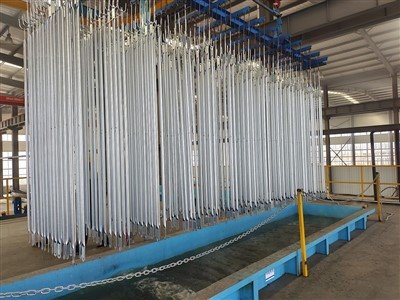
If you’re currently dealing with thick, brittle coatings, high zinc costs, or rejection rates cutting into your bottom line, let’s talk. We can send a technical team to your shop to run a free coating analysis, test your parts with our blown system, and show you exactly how much you can save. There’s no one-size-fits-all solution, but there is a solution that fits your specific operation. Don’t let your line get left behind with outdated, generic blown equipment—upgrade to a thin coating setup that delivers consistent, high-quality results, and watch your profits go up.
Hot Dip Galvanizing Equipment Parts References
The International Zinc Association. (2022). Hot Dip Galvanizing: Coating Thickness and Performance. IZA Technical Report.
ISO 1461:2019. Hot-dip galvanized coatings on fabricated iron and steel articles – Specifications and test methods. International Organization for Standardization.
Galvanizers Association of Australia. (2021). The Benefits of Precision Air Wiping in Hot Dip Galvanizing. Technical Paper.
Corrosion Science. (2020). Sacrificial Protection of Galvanized Steel: Impact of Coating Uniformity on Longevity. Vol. 168, p. 108567.
Jinzhou Hongri Galvanizing Equipment Co., Ltd.
As one of the most professional thin coating blown hot dip galvanizing equipment manufacturers and suppliers in China, we’re featured by quality products and good price. Please rest assured to buy durable thin coating blown hot dip galvanizing equipment for sale here from our factory. We also accept customized orders.
Address: Yingpan Industrial Park, Taihe District, Jinzhou City. Address: No. 90, Gongwei Street.
E-mail: rsea.jz@163.com
WebSite: https://www.hrgalvanize.com/
