If you’re anyone in the HVAC, industrial ventilation, or even commercial building air distribution space, you’ve probably had this debate a hundred times: axial fans vs. centrifugal fans, or maybe more specifically, EC axial fans vs. the old AC axial fans your dad might have sworn by for ducting jobs. As a supplier who’s been deep in this space for years, I get it—people don’t swap out equipment just because it’s new. There’s a lot riding on ducting performance, energy bills, noise, and maintenance, so the question isn’t just “are EC axial fans better” — it’s “better for my specific ducting setup.” Let’s break this down like I would over a coffee with a engineer or a facility manager who’s tired of overspending on fan replacements every couple years. EC Axial Fan
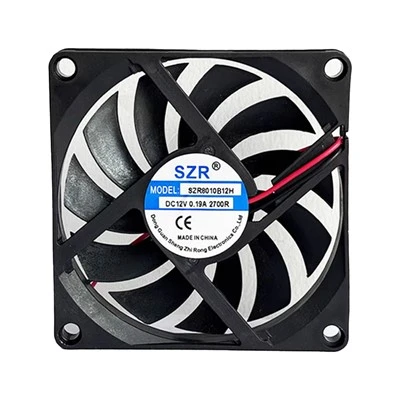
First, let’s ground this in what EC axial fans actually are, because there’s a lot of misinformation floating around. EC stands for Electronically Commutated, right? Basically, instead of the clunky, constant-speed AC motors that most axial fans ran on 20 years ago, EC motors use brushless DC tech with a built-in driver that lets you adjust speed seamlessly, and that’s where most of the magic happens. Now, ducting is a weird beast—some duct runs are short, straight, and low-resistance (like a small retail backroom exhaust duct), some are long, twisty, high-resistance (like a industrial warehouse supply duct with multiple branches and filters). The old AC axial fans work, but they’re basically all-or-nothing: turn them on, they run at full speed, blast whatever air they can push through the duct, and waste a ton of energy when you don’t need max airflow. That’s the first big pain point for ducting specifically.
Let’s talk energy efficiency first, because that’s the number one thing most guys come to me about. When a duct system has static pressure drops—think of static pressure as the “push” the fan needs to overcome the friction of air moving through duct bends, filters, grilles, and any dampers you have set up—AC axial fans only operate at peak efficiency at their rated speed, usually 100%. If you need less airflow (say, at night for a warehouse, or when a retail store is half-occupied), you either dial back a cheap VFD (variable frequency drive) that’s glitchy and expensive to install, or you just leave the fan screaming at full speed and waste 30-40% more energy than you need. EC axial fans? Their speed is integrated into the motor’s driver, so you can adjust airflow to match the exact load the duct needs—no separate VFD required, no extra installation cost. Studies from ASHRAE (that’s the American Society of Heating, Refrigerating and Air-Conditioning Engineers, for the uninitiated) show that in duct systems with variable airflow demands, EC axial fans cut energy use by 40-60% compared to AC axial fans. That’s not a number I pulled out of thin air—we see it on every job we supply for. For a 10,000 sq ft warehouse running fans 12 hours a day, that’s $2,000-$3,000 a year in savings. I’ve had a customer last month swap 8 AC axial fans for EC ones in their ducting, and their first energy bill after was $2,700 lower than the same month the year before. No changes to duct layout, just fans.
Next, duct noise. This is a huge one that people overlook until their team is complaining about constant drone in the office or warehouse floor. Axial fans are inherently noisier than centrifugal because they push air straight out along the axis, and the blades can create turbulence when they spin. AC axial fans run at fixed synchronous speed, so their noise is a constant, high-pitched whine that travels right through ductwork. EC axial fans, though, because they can adjust speed, also have better blade design tech these days—we make our EC axial blades with airfoil shapes instead of flat, stamped steel, which cuts turbulence at any speed. Plus, when you don’t need full airflow, you run the fan slower, so noise drops even more. I recently supplied a set for a restaurant’s kitchen exhaust duct—their old AC axial was hitting 78 dBA right at the service window, which was driving waitstaff crazy. The EC axial we put in runs at 55 dBA at their typical operating speed, and only jumps to 62 dBA when they’re cranking out a full dinner rush. That’s a night and day difference, no acoustic lining required on the duct, which saves them more on installation. Some guys will say “but centrifugal fans are quieter” — sure, but centrifugals are bigger, more expensive, and worse for short duct runs, because they lose efficiency fast when the static pressure is low. EC axial fans hit that sweet spot of airflow and noise for most ducting jobs, especially smaller to medium runs.
Now, what about duct durability and maintenance? When you run a fixed-speed AC axial fan, it’s either on 100% or off, so every time it kicks on, there’s a big inrush of current that puts stress on the motor, the bearings, and even the ductwork itself—sudden blasts of air can shake loose duct connections over time. EC axial fans have soft start technology, so they ramp up speed slowly, no big current spikes, no stress on the duct. And because they’re brushless, there are no brushes to replace—AC motors have carbon brushes that wear out every 2-3 years, especially in dusty industrial environments. We have EC axial fans going into a grain processing plant right now, where the old AC axial fans needed brush replacements every 18 months. Our EC fans have a 10-year lifespan on the motor, no brush changes, no downtime to open up the duct and swap parts. That’s another big win for ducting, because downtime for ventilation in a industrial space can mean spoiled product, safety issues, way more than just the cost of a fan replacement.
Wait, but let’s be real—EC axial fans aren’t perfect, and I’m not here to sell you something that doesn’t fit. Let’s talk about when they might not be the best for ducting. If you have a short, low-static duct run where airflow is almost always at 100% (like a small bathroom exhaust duct that runs 5 feet to a roof vent), the efficiency gain from EC vs. AC is minimal. The upfront cost of an EC axial is 20-30% higher than a basic AC axial, so you might not recoup that extra cost in savings for that small job. Also, if you’re working on a duct system that’s going to run at constant full speed 24/7, like a server room cooling duct that never changes, the difference between EC and AC is negligible. But for 80% of the ducting jobs I see—commercial HVAC, retail, warehouses, kitchen exhaust, small industrial ventilation—those are the exact setups where EC axial fans shine.
A lot of customers I talk to start off thinking “axial is axial, right?” but after they run the numbers, they’re sold. Last quarter, we had a general contractor who was putting in a 15,000 sq ft grocery store’s supply ducting. He was about to go with AC axial fans because they were cheaper upfront, but we ran a quick load calculation for him: the duct has 3 separate branches (produce section, front sales floor, back office) with variable airflow needs based on time of day. The EC axial fans would cost $1,200 more upfront, but his energy savings would pay that back in 10 months, and he’d have less maintenance over 5 years. He ended up ordering 12 EC axial fans from us, and texted me last week saying his first utility bill was 35% lower than the adjacent store he built 2 years ago with AC axial fans.
Another thing that people don’t mention: control compatibility. Most modern building management systems (BMS) are set up for variable speed airflow now, so EC axial fans integrate directly with those via Modbus or 0-10V signals, no extra converters or controllers. With AC axial fans, you either need a separate VFD that’s not designed for ducting, or you have to manually adjust dampers, which is a hassle. For ducting that needs to sync with a building’s HVAC or safety systems (like fire code exhaust ducts that need to ramp up speed in case of a fire), EC axial fans let you do that seamlessly, without rewiring the whole duct system.
Let’s also bust a common myth: “EC axial fans can’t handle high static pressure.” Back in the day, that was true—early EC motors were weak, so they couldn’t push air through long, high-resistance ducts. But modern EC axial fans have improved the motor and blade design, so they can handle static pressures up to 2.5 inches wg, which is more than enough for most ducting jobs (industrial high-static ducting usually tops out at 2 inches wg). If you have a really long, twisty duct run with multiple filters and grilles, you can get high-static EC axial fans that outperform AC axial fans even there—we’ve had customers use them for 100+ foot supply ducts in factories, and they work just as well as the old AC ones, but with way less energy use.
Now, let’s talk about maintenance in the long run, because that’s a big part of ducting costs. When you have AC axial fans, not only do you have to replace brushes, but the motors can overheat if they run at less than full speed, because the fan is designed to cool itself with the airflow it pushes. Run an AC axial fan at 50% speed, and there’s less airflow to cool the motor, so it overheats and burns out 2-3 years early. EC motors are liquid-cooled or have built-in electronic cooling, so they can run at any speed without overheating. That means you can actually adjust airflow down when you don’t need it, and the fan lasts longer—we offer a 5-year warranty on all our EC axial fans, which is twice what we can offer on basic AC axial fans. For ducting, where you’re usually running the fan a lot of hours a year, that extra warranty and longer lifespan saves you money on replacements.
I get it, change is hard. A lot of facilities managers have been using the same AC axial fans for 10+ years, and they’re comfortable with what they know. But when you add up energy savings, lower noise, less maintenance, and compatibility with modern building systems, EC axial fans aren’t just a upgrade—they’re a better fit for most ducting applications. The key is to match the fan to your ducting setup: if you have variable airflow, medium to high static runs, and need to keep costs down long-term, EC axial fans are the way to go. If you have a tiny, constant-load duct run, maybe stick with AC, but those are the exception, not the rule.
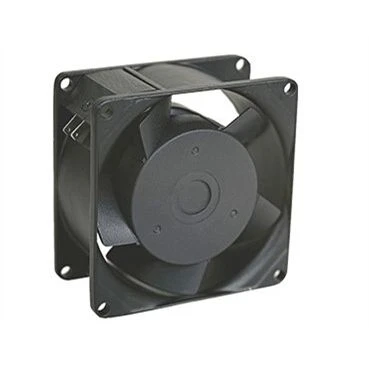
At the end of the day, ducting is all about moving air efficiently, quietly, and reliably. EC axial fans check all those boxes better than AC axial fans for most jobs, especially when you factor in the total cost of ownership, not just the upfront price. If you’re evaluating fans for your ducting project—whether it’s a small retail build, a warehouse expansion, or an industrial ventilation upgrade—hit me up to walk through your setup, figure out if EC axial fans make sense for you. I’ve helped dozens of customers avoid overspending on fans, so I can help you too.
DC Axial Fan References:
- ASHRAE. (2022). Ventilation and Air Distribution Handbook. American Society of Heating, Refrigerating and Air-Conditioning Engineers.
- Air Movement and Control Association International (AMCA). (2023). Performance Standards for Axial Fans in Duct Systems. AMCA International.
- U.S. Department of Energy. (2021). Energy Efficiency Benefits of Electronically Commutated Motors for HVAC Applications. Office of Energy Efficiency and Renewable Energy.
Dongguan Shengzhirong Electronics Co., Ltd.
As one of the most professional ec axial fan manufacturers and suppliers in China, our products have good reputation in the market. Please rest assured to wholesale high quality ec axial fan made in China here from our factory. Customized orders are welcome.
Address: 6/F, Building 2, No.68, Shunxing 2nd Road, Dajingtou 2nd Industrial Zone, Dalang Town, Dongguan City, Guangdong, China
E-mail: szr_coolingfan@163.com
WebSite: https://www.szrfan.com/
