If you’ve ever spent time in a high school geometry class, you might remember rhombuses being described as “that lopsided square” or a shape with four equal sides. But if you’re in the business of supplying genuine rhombus diamonds—precision-cut, high-grade stones that stand apart from generic diamond cuts—this definition is just the starting line. As a Rhombus Diamond supplier, I get questions every day from jewelers, designers, and gemstone enthusiasts asking: how do you actually prove a shape is a rhombus diamond? It’s not just about four equal sides, and skipping the fine line between a cut rhombus and a diamond-shaped impostor can cost you in quality, durability, and customer trust. Let’s break this down the way I’ve taught my team over years of curating and supplying rhombus diamonds to industry partners. Rhombus Diamond
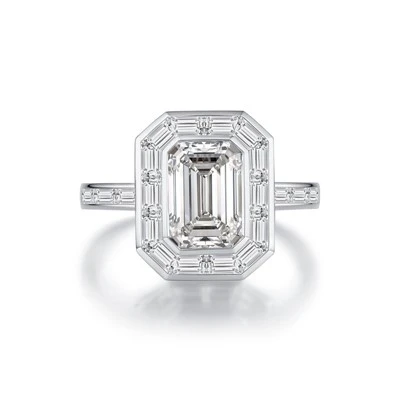
First, let’s start with the core geometry, because rhombus diamonds aren’t just marketing jargon—they’re defined by strict geometric rules that separate them from other diamond cuts, like princess cuts or baguettes. A rhombus, in standard Euclidean geometry, is a quadrilateral (four-sided shape) that meets two non-negotiable criteria: all four sides are of equal length, and opposite sides are parallel to each other. Most people stop there, but diamonds have an extra layer: they’re not just two-dimensional shapes on paper—they’re three-dimensional gemstones with facets, angles, and proportions that affect their brilliance and structural integrity. A flat, two-dimensional drawing of a rhombus diamond isn’t worth much to a buyer; we need to prove the three-dimensional gem matches the geometric definition of a rhombus, with the precision that makes it a quality stone, not a hobbyist project.
Let’s put geometry into practice, because anyone can measure sides with a caliper, but proving a shape is a rhombus diamond takes a few more checks. First, verify side length equality—and I mean exact equality, not “close enough” down to a fraction of a millimeter. For a standard rhombus diamond, the difference between any two sides can’t exceed 0.1mm, because even a tiny imbalance throws off the symmetry that makes the cut perform well under light and pressure. Last year, a custom jeweler from Chicago sent us a set of “rhombus” cuts he’d sourced from a small online supplier; when our gemologists measured their sides, three stones had one side 0.3mm shorter than the other three. Those weren’t genuine rhombus diamonds—they were lopsided quadrilaterals, destined to chip under setting pressure and fade in brilliance. That’s the first test: side length parity.
Next, opposite side parallelism. How do you prove two sides are parallel on a three-dimensional diamond? You can’t just eyeball it. We use a digital gem microscope with a grid overlay, or a coordinate measuring machine (CMM) that maps every point on the stone’s girdle (the thin band around a diamond’s middle) to within 0.001mm. For a rhombus, each pair of opposite sides must be perfectly parallel—no slant, no lean, no minor angle deviation. If one side drifts even 1 degree from parallel, the stone will have an uneven light distribution: it will look brighter on one side and dimmer on the other, which kills its value as a center stone for engagement rings or fine jewelry. I’ve seen clients reject perfectly good-looking stones just because this parallelism test failed, and I can’t blame them—no one wants a diamond that shines lopsidedly.
But here’s where rhombus diamonds get unique from basic geometric rhombuses: their internal angles. A pure geometric rhombus can have any angle between 0 and 180 degrees, but a rhombus diamond—specifically, the ones we supply for fine jewelry and industrial use—has standard internal angles of 60 degrees and 120 degrees, alternating around the stone. That’s not a random number; it’s the angle that maximizes light refraction (the sparkle you see when a diamond catches light) while maintaining structural durability. For our standard rhombus diamonds, every angle must be within 0.5 degrees of 60 or 120. If you have a shape with four 90-degree angles, that’s a square, not a rhombus diamond—easy mistake to make, but a critical one. Last quarter, a designer from Paris ordered 50 rhombus diamonds for a line of Art Deco-inspired necklaces; when we delivered the stones, their gem team ran angle checks and found three had 92-degree angles. We replaced them immediately, because a square-cut stone wouldn’t match the line’s cohesive design, and using it would have left the designer with a product that didn’t live up to customer expectations.
Once you’ve nailed the geometric basics, you have to confirm it’s a diamond, not a different stone cut into a rhombus shape. That’s a common trick in the gem industry: cutting cubic zirconia, moissanite, or even low-quality brown diamonds into rhombus shapes and passing them off as genuine rhombus diamonds. Proving a stone is a diamond takes both visual and lab-based tests, and as a supplier, we never skip these steps. First, the scratch test—though we only do this on loose, un-set stones, because scratching a set diamond would ruin it. A real diamond is the hardest natural substance on Earth, so it can scratch glass, quartz, and most other materials; imitations can’t. But the real proof comes from a diamond tester, which measures the thermal conductivity of the stone. Diamonds conduct heat far better than any other common gemstone, so a reliable diamond tester will light up positively for a real diamond, even if it’s cut into a rhombus shape. We run every stone we supply through this test twice—once pre-cut, once post-cut—to make sure a rhombus shape never makes us miss an imitation.
For industrial clients, like those using rhombus diamonds in precision cutting tools or semiconductor components, there’s an extra layer of proof: symmetry and facet count. A genuine rhombus diamond (especially the small, micron-sized ones we supply for industrial use) has 8 facets on the girdle and 4 facets on each pavilion (the bottom half of the stone), totaling 16 facets. Imitations often have fewer facets or unevenly spaced ones, which makes them less effective for industrial applications. A client in the aerospace industry told us last year that switching to our verified rhombus diamonds cut their tool wear by 22%—because our stones’ consistent facet alignment meant they cut material evenly, without slipping. That’s the difference between a rhombus diamond that’s just a shape and one that’s engineered to perform.
I also want to address a common misconception: people often confuse rhombus diamonds with kite-shaped diamonds, or even parallelograms. Let’s clear that up, because this is where a lot of suppliers cut corners. A parallelogram has opposite sides equal and parallel, but adjacent sides don’t have to be equal—so it’s not a rhombus. A kite has two pairs of adjacent equal sides, which means it doesn’t meet the four equal sides rule for a rhombus. If you’re sourcing a rhombus diamond, a good supplier will distinguish between these shapes and prove the four equal sides, parallel opposite sides, and alternating 60/120 degree angles that define the genuine article. I’ve had buyers come to us after being burned by a supplier that called kite shapes “rhombus diamonds” and were shocked when our stones looked different—don’t let that happen to you.
When I’m training my team to certify a rhombus diamond for supply, we have a three-step process we’ve refined over 15 years in the business. First, geometric inspection: use a CMM to map all side lengths, parallelism, and angles, with a written report to back it up. Second, gem verification: confirm the stone is a genuine diamond, not an imitation, via thermal conductivity testing and visual magnification of facets. Third, performance check: for fine jewelry stones, test light refraction (brilliance) and structural integrity; for industrial stones, test hardness and cutting precision. This isn’t overkill—it’s how we ensure every stone we supply lives up to the name “rhombus diamond.”
If you’re a jeweler looking for stones that will hold up under setting and look consistent across a collection, a designer needing precision cuts for a custom line, or an engineer sourcing diamonds for industrial tools, proving a shape is a rhombus diamond is non-negotiable. Skipping these steps might save you a few bucks upfront, but it will cost you in returns, damaged relationships, and lost customers down the line.
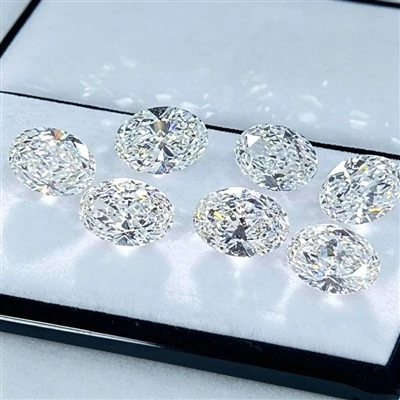
As a Rhombus Diamond supplier, we don’t just sell stones—we sell proof. Every order comes with a detailed certificate that includes geometric measurements, angle verifications, and gem type confirmation. If you’re sourcing rhombus diamonds for your next project and want to avoid the impostors, let’s connect to talk through your needs.
Diamond Earrings References
Euclid. Elements, Book I, Proposition 22.
American Gem Society. “Gemstone Identification Basics” (2022)
International Organization for Standardization. “Diamond Terminology and Classification” (ISO 14571:2018)
World Diamond Council. “Precision Cut Diamond Standards” (2021)
Hongkong Jingcan Crystal Craft Limited
Hongkong Jingcan Crystal Craft Limited is one of the most experienced rhombus diamond manufacturers and suppliers in China. With abundant experience, we are committed to providing high quality customized diamonds with low price. Please rest assured to wholesale bulk classy rhombus diamond in stock here and get quotation from our factory. 3 years warranty is available.
Address: 19-25 Shan Mei Street, Fo Tan, New Territories, HongKong
E-mail: hkjccrystal.cheungkong@gmail.com
WebSite: https://www.hkjcdiamond.com/
