Hey there! I’m a supplier of carbon steel pipe fittings, and I’ve been in this business for quite a while. Over the years, I’ve seen how different factors can impact the use of these pipe fittings, and one of the most interesting ones is magnetic properties. Today, I wanna chat with you about how magnetic properties affect the use of carbon steel pipe fittings. Carbon Steel Pipe Fitting
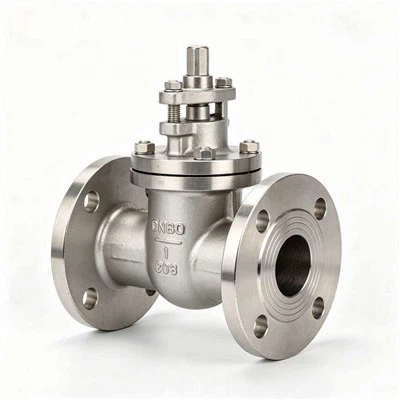
First off, let’s talk about what carbon steel pipe fittings are. Carbon steel is an alloy made mainly of iron and carbon, with small amounts of other elements. Pipe fittings, as you probably know, are used to connect, control, and change the direction of pipes in a piping system. They come in various shapes and sizes, like elbows, tees, and couplings.
Now, the magnetic properties of carbon steel pipe fittings stem from the iron content in them. Iron is a ferromagnetic material, which means it can be magnetized and attracted to a magnet. The degree of magnetic properties in carbon steel depends on the carbon content and the presence of other alloying elements.
One of the key ways magnetic properties affect the use of carbon steel pipe fittings is in the area of inspection. Non – destructive testing (NDT) methods are commonly used to check the integrity of pipe fittings, and magnetic particle inspection (MPI) is a popular NDT method for ferromagnetic materials like carbon steel. Thanks to the magnetic properties of these fittings, MPI can be used to detect surface and near – surface defects such as cracks, porosity, and laps.
When we perform MPI, we magnetize the pipe fitting and then apply ferromagnetic particles. If there are any defects on the surface or near the surface, the magnetic field around the defect is distorted, and the ferromagnetic particles will gather at the defect location, making the defect visible. This allows us to quickly and accurately identify potential problems with the pipe fittings before they are installed, which is crucial for ensuring the safety and reliability of the entire piping system.
However, the magnetic properties can also pose some challenges. In some applications where magnetic interference is a concern, carbon steel pipe fittings may not be the best choice. For example, in electronic equipment or sensitive instrumentation, the magnetic field from carbon steel pipe fittings could interfere with the normal operation of these devices.
Let’s say you’re setting up a data center. You need to run a piping system for cooling or other purposes, but the electronic equipment in the data center is very sensitive to magnetic fields. In this case, the magnetic properties of carbon steel pipe fittings could cause issues, such as data corruption or malfunction of the equipment. So, in such situations, you might have to look for non – magnetic alternatives or take measures to shield the magnetic fields.
Another aspect is the installation environment. In some industrial settings, there may be strong external magnetic fields. Carbon steel pipe fittings, due to their magnetic properties, can be affected by these external fields. For instance, if there are large motors or transformers nearby that generate strong magnetic fields, the pipe fittings could get attracted to these magnetic sources, which might lead to misalignment during installation. This misalignment can cause stress on the pipes and fittings, increasing the risk of leaks or failures in the long run.
On the positive side, the magnetic properties can also be an advantage in some storage and handling scenarios. Since carbon steel pipe fittings are magnetic, they can be easily lifted and moved using magnetic lifting devices. This makes the handling process more efficient, especially in large – scale warehouses or construction sites. Instead of using complicated mechanical lifting systems, we can simply use a magnetic crane to pick up and transport multiple pipe fittings at once.
Moreover, the magnetic properties can help in organizing the storage of pipe fittings. We can use magnetic racks or bins to keep the fittings in place, preventing them from rolling or moving around. This not only makes the storage space more organized but also reduces the risk of damage to the fittings during storage.
In terms of welding, the magnetic properties of carbon steel pipe fittings can have both positive and negative impacts. During the welding process, a strong magnetic field can cause arc blow. Arc blow is a phenomenon where the welding arc is deflected from its normal path due to the influence of the magnetic field. This can lead to uneven welds, poor fusion, and other welding defects. To mitigate this problem, welders need to take special precautions, such as using anti – arc – blow techniques or adjusting the welding parameters.
On the flip side, the magnetic properties can also help with some automated welding processes. For example, in some robotic welding systems, the magnetic field can be used to accurately position the pipe fitting and guide the welding torch. This can improve the precision and consistency of the welds, resulting in higher – quality pipe joints.
Now, I know what you might be thinking. With all these factors related to magnetic properties, how can you choose the right carbon steel pipe fittings for your specific application? Well, that’s where I come in. As a supplier of carbon steel pipe fittings, I have in – depth knowledge of the magnetic properties of different types of carbon steel. I can help you assess whether the magnetic properties will be an advantage or a drawback in your project and recommend the most suitable pipe fittings accordingly.
Whether you’re working on a small – scale plumbing project or a large – scale industrial installation, I’m here to offer you the best solutions. My team and I can provide you with high – quality carbon steel pipe fittings that meet your specific requirements. We also offer technical support and advice to ensure that you get the most out of your pipe fittings.
So, if you’re in the market for carbon steel pipe fittings, don’t hesitate to reach out. Let’s have a chat about your project, and I’m sure we can find the perfect pipe fittings for you. Whether it’s about dealing with magnetic properties or any other concerns, I’m confident that we can work together to achieve your goals.
Rubber Expansion Joint References
- "Metallurgy of Welding" by John C. Lippold
- "Non – Destructive Testing Handbook" by the American Society for Nondestructive Testing
- "Materials Science and Engineering: An Introduction" by William D. Callister, Jr. and David G. Rethwisch
Shanxi Yuanhang Machinery Construction Industry and Trade Co., Ltd.
We’re well-known as one of the most experienced carbon steel pipe fitting manufacturers in China. With a professional production team, we are able to meet the needs of the majority of our customers. Welcome to buy discount carbon steel pipe fitting in stock here from our factory. Contact us for pricelist and free sample.
Address: Taiyuan City, Shanxi Province
E-mail: anzhiyuan@yhmadeinprc.com.cn
WebSite: https://www.yhmadeinprc.com/
