As a supplier of automatic cartoning machines, I get this question all the time: “What’s the actual speed of an automatic cartoning machine?” It’s not a simple number you can pull off a spec sheet, and over the years I’ve learned that most people asking it don’t just want a random RPM or “boxes per minute.” They want something that works for their product line, their workflow, and their bottom line. Let me break this down the way I explain it to my customers, straight talk no fancy jargon. Automatic Cartoning Machine
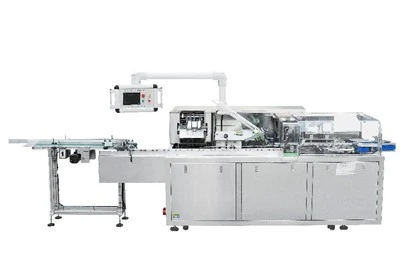
First, let’s clear up a common misconception. When someone says “speed,” they usually mean boxes per minute (BPM), right? But a machine that cranks out 600 BPM on a test bench? That’s almost never what you’ll get in a real factory. Why? Because automatic cartoning machines don’t just fold cardboard and shove products inside. They have to handle different parts in sequence: feeding products into the machine, loading them into cartons, closing tucks or gluing the carton, and stacking or outputting finished boxes. If one of those parts can’t keep up, the whole line slows down. That’s called the “bottleneck effect,” and it’s one of the first things I walk customers through when we talk about speed.
Let’s take an example I use all the time. Suppose you’re packaging small blister packs of over-the-counter vitamins. Those blisters are easy to feed, no jams, and they fit neatly into a standard carton. A mid-sized automatic cartoning machine might hit 400 BPM for that job. But if you’re packaging fragile glass bottles—say, 500ml olive oil jars—you can’t run that fast. Jars can crack if they’re bumped, so you have to slow the product feeder to 150 BPM to avoid damage. Suddenly the entire cartoning line tops out at 150 BPM, even though the carton-folding part could go twice as fast. That’s why specs are just a starting point, not a promise.
Next, let’s talk about the factors that actually determine a machine’s real-world speed. The first is carton size and design. A tiny, pre-glued 2-ounce pill bottle carton is way faster to handle than a large, hard-to-fold carton for a 1kg box of cereal. Machines built for small, simple cartons can hit higher BPM than those designed for larger, more complex ones with multiple tucks, labels, or inserts. Then there’s the product type: as I mentioned before, fragile products, irregular shapes, or products that need special handling (like syringes or food items that can’t be touched by machinery) all slow things down. A machine with custom grippers or gentle product feeders will run slower than a basic model for uniform products, but it will avoid costly jams and product damage that would stop the line entirely.
Another big one is changeover time, which ties into how much “actual speed” counts for your production schedule. A machine that runs 500 BPM but takes 45 minutes to switch from packaging pills to cough drops might actually be less efficient than a machine that runs 300 BPM but takes 10 minutes to change over. I’ve had customers come to me bragging about their 600 BPM machine, only to tell me they only run it at 250 BPM because changeovers eat into their shift. Speed isn’t just about how many boxes you can make in a minute—it’s about how many boxes you can actually ship at the end of the day, accounting for stops, changeovers, and downtime.
Now, let’s get into the numbers that matter most for different industries. I work with a lot of pharma, food, and consumer goods brands, so these are the ranges I see day to day. For the pharma sector, where precision and speed matter but product handling is critical, standard automatic cartoning machines usually run between 100 and 300 BPM. High-speed models for uniform products like blister packs can hit up to 500 BPM, but that’s only in controlled test environments. For food and beverage, which has a mix of small products and larger containers, speeds range from 80 BPM for fragile items like pastries in cartons up to 400 BPM for uniform things like energy bars. Consumer goods, like small plastic bottles or cosmetic containers, often run between 200 and 600 BPM, since the products are easy to handle and cartons are simple.
I also need to mention the difference between intermittent motion and continuous motion machines, because that’s a huge speed difference. Intermittent motion machines are the most common for small to mid-sized production lines. They stop and start for each step: feed product, load carton, close carton, move on. These are reliable, easier to maintain, and perfect for low to medium volume runs—their speed tops out around 300 BPM. Continuous motion machines, on the other hand, run nonstop, with cartons moving along a conveyor at a steady pace. They’re faster, often hitting 600 to 1,000 BPM, but they’re more expensive, harder to adjust, and not ideal if you make frequent product changes. Most of my customers don’t need 1,000 BPM—they need a machine that balances speed with flexibility, so intermittent motion is still the workhorse for most small to medium operations.
A question I get a lot is: “Can I upgrade my machine to run faster?” The answer is usually, “It depends.” Sometimes, if you’re only dealing with carton size, you can swap out grippers or adjust the feeding mechanism to bump up speed by 50 or 100 BPM. But if your bottleneck is the product feeder, you can’t just make the machine go faster without damaging products. I had a customer last year who wanted to run his pill cartoner at 400 BPM, but his feeder could only handle 250 BPM. We ended up modifying the feeder to match the cartoner’s speed, which cut his overall downtime by 15% and let him hit 350 BPM instead of the 220 he was getting before. It wasn’t a full machine upgrade, just a small adjustment, and it made a big difference for his output.
Don’t forget about maintenance when you’re thinking about speed. A machine that runs too fast without regular cleaning or part replacements will have more jams and breakdowns. I’ve seen customers push their machine to 10% above its recommended speed, only to have it stop three times a shift, wiping out any speed gain. It’s a tradeoff: higher speed means more wear and tear, so you have to invest in better maintenance to keep it running. That’s why I always tell customers to pick a machine that runs at the speed they actually need, not the highest number on the spec sheet. A machine that’s running reliably at 300 BPM is worth more than a machine that runs at 500 BPM but is always broken down.
Let’s talk about real-world results. I had two customers last year, both in the snack food business. One bought a high-speed continuous motion machine advertised at 800 BPM. He was so excited, he had it installed and tried to run it at 750 BPM right away. His products were small granola bars, which worked in theory, but the feeder couldn’t keep up, so he had constant jams. After a month, he was only running it at 300 BPM, and had to hire a full-time technician just to fix jams. The other customer bought a mid-range intermittent motion machine rated at 350 BPM, adjusted the feeder to match, and runs it at 320 BPM consistently. His downtime is less than 2% a shift, and he meets his production targets 98% of the time. That’s a way better outcome, even though his machine’s top speed is less than half the first customer’s.
So, going back to the original question: “What is the speed of an automatic cartoning machine?” The short answer is, it depends on your products, your line setup, and your needs. The real answer lies in finding a machine that balances speed, flexibility, and reliability. As a supplier, my job isn’t just to sell a machine that makes a high BPM number—it’s to make sure that machine works for your specific operation. If you’re packaging fragile products, slow speed with no jams is better. If you’re packaging uniform small items, higher speed makes sense. If you change products often, a machine that can switch over quickly is more valuable than a super fast one.
At the end of the day, speed is a tool, not a goal. A machine that’s too fast costs you money in damage, downtime, and maintenance. A machine that’s too slow can’t meet your production needs. The sweet spot is where the machine’s speed matches your workflow. If you’re looking to upgrade your cartoning line or learn more about what speed makes sense for your products, I’m here to help. We can walk through your production process, look at your products and carton designs, and figure out the right machine for you, no guesswork, no fancy numbers that don’t add up.
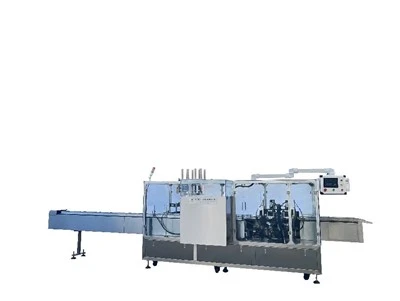
When it comes to automatic cartoning machines, speed doesn’t have to be a mystery. It’s about understanding what your operation actually needs, not just what a spec sheet says. That’s the approach I take with every customer, and it’s why so many of them come back. If you’re ready to find the right balance for your business, reach out to discuss your requirements. We can work through every detail to make sure you get a machine that runs at the speed that works for you, not just the highest possible number.
Food Bagging Machine References
- “Automatic Cartoning Machines: Selection and Operation Guidelines,” Packaging Technology and Science, 2021
- Industrial Automation Association, “Performance Metrics for Packaging Machinery,” 2022
- Smith, J., “Bottleneck Analysis in Packaging Lines,” Journal of Manufacturing Engineering, 2020
Zhejiang Tuoyu Packaging Machinery Co., Ltd.
Zhejiang Tuoyu Packaging Machinery Co., Ltd. is one of the most professional automatic cartoning machine manufacturers and suppliers in China. With abundant experience, we warmly welcome you to wholesale durable automatic cartoning machine made in China here from our factory. Good service and quality products are available.
Address: Workshop No.12, No.11-19, Xinbin Road, Binhai New Area, Pingyang County, Wenzhou City
E-mail: 15868789201@163.com
WebSite: https://www.tuoyupack.com/
