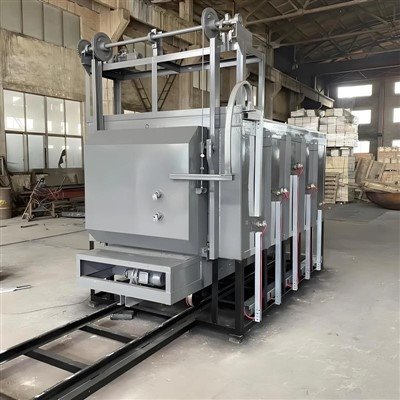
Car-Bottom Forging Furnace Hey everyone, it’s Jake here from the tempering furnace team — been getting so many DM’s and calls lately from folks asking one specific question that’s been popping up more and more: can a regular tempering furnace actually be used for heat-treating non-ferrous metals? Full transparency, I used to side-eye this question too when I first started in the industry back in 2012. I spent my first three years on the grind walking shops through furnaces, troubleshooting weird heat-treat fails, and yeah, half the time I was just learning as I went. These days, non-ferrous metals are everywhere in manufacturing — think aluminum for EV battery casings, copper for EV motors, brass for plumbing fixtures, even titanium for aerospace parts — so it makes total sense why guys are asking if they can repurpose what’s already in their shop instead of dropping mad cash on a whole new furnace. Let’s break this down like we’re chatting over a cold beer after a long workday, no stuffy textbook jargon, just real talk from someone who’s seen this work and seen it blow up in their face. First off, let’s get the basics straight: tempering, at its core, is a heat treatment step done after quenching (usually for steels) to reduce brittleness, relieve internal stress, and tweak hardness. But non-ferrous metals — aluminum, copper, brass, magnesium, titanium — don’t really need tempering the way steel does. Wait, hold on, don’t tune out just yet. Yeah, their heat treatment needs are different, but that doesn’t mean tempering furnaces are totally useless for them. That’s the big myth I want to bust today. Let’s take aluminum, for example. You know those aluminum extrusions for window frames? Or the 6061 T6 used in bike frames? After solution heat treating and quenching, aluminum has that super hard, strong T6 state — but sometimes, if you’re machining parts that have tight tolerances, you get residual stress from the cutting process, right? The part might warp a tiny bit over time, or crack when you drill a hole. That’s where a lower-temperature, stress-relief treatment comes in. And guess what? A tempering furnace, set to like 300°F to 500°F (way lower than steel tempering temps which are usually 800°F+), is perfect for that. I had a customer a couple years back — a small machine shop in Detroit that made EV motor brackets from 6061 aluminum — they had a old tempering furnace they used for carbon steel parts, and they started using it to do stress relief on their aluminum brackets. Saved them $12k that year by not buying a dedicated stress-relief oven, and their part reject rate dropped by 7% because they fixed that post-machining warpage issue. But here’s the catch — you can’t just throw any non-ferrous metal into a regular tempering furnace that’s set for steel. Let’s talk about the big no-nos first, because that’s where most guys mess up. First, temperature control. A lot of basic tempering furnaces for steel have a high temp limit — like 1200°F or higher — but they might not have precise zoning, or uniform heat across the chamber. Copper, for example, if you heat it too unevenly, you get something called hot shortness, where it becomes brittle and cracks when you work it. Or brass, which has zinc in it — if you heat brass above like 1100°F in open air, zinc starts oxidizing off, and you get that crummy, discolored surface called “fire cracking” or just poor surface quality for parts that need a smooth finish. That’s a problem. Another big one: atmosphere. A lot of tempering furnaces for steel use atmosphere control to prevent scaling — stuff like nitrogen or endothermic gas — but some entry-level tempering furnaces are air-only. Copper oxidizes like crazy in open air at even low temps, turning that nice shiny copper into a dull, brownish-black crud that’s impossible to polish or solder properly. Aluminum too — if you heat aluminum in open air above like 500°F, it forms a tough aluminum oxide layer that messes with coating or machining. So, if you’ve got a basic air-only tempering furnace that’s only used for plain carbon steel, can you use it for non-ferrous? Only for certain applications, like small aluminum parts that just need minor stress relief, no finish requirements. But if you’re doing anything higher-end, like copper coils or brass plumbing fittings that need a smooth surface, you’re gonna have issues. Wait, but what if you adjust your tempering furnace to work with non-ferrous? That’s the real sweet spot here. Modern tempering furnaces can be modified, or even built with flexible setups, to handle both ferrous and non-ferrous. Let’s say you have a medium-sized batch tempering furnace — the kind shops use to do large lots of steel springs or automotive gears. You can tweak the controls to go lower for non-ferrous, add a simple inert gas setup (like low-flow nitrogen, which is way cheaper than fancy atmospheres) to prevent oxidation on copper and brass, and even add airflow baffles to make the heat more uniform for tricky parts. I had another customer — a aerospace parts supplier in Seattle that works with titanium — they used to run separate furnaces for steel and titanium, but they retrofitted one of their tempering furnaces with an adjustable atmosphere system, and now they run both. Titanium needs heat treatment for aging, right? Not tempering, but it’s a low-temp hold (like 800-900°F) after solution treating, to boost strength. That’s almost exactly what a tempering furnace does, just for a different material. They saved like $80k a year on utility costs and equipment leases by doing that. Now, let’s get into the different non-ferrous metals and what works for them with a tempering furnace, because not all non-ferrous is created equal. Aluminum first: works super well for low-temp stress relief (300-500°F). That’s basically 100% doable in any tempering furnace, no mods needed, as long as you’re not running it above that 500°F mark where oxidation starts. If you need to go higher for aluminum — like solution heat treating for casting, which is 900-1000°F — wait, that’s above most tempering furnace limits. Oh, right, tempering furnaces are designed for post-quench holds, not full solution heat treating, so that’s a different step. But the stress relief part? Total home run. Next up: Copper and Brass. Here’s where it gets a bit trickier. Copper needs to be in an inert atmosphere to avoid oxidation, so if your tempering furnace has that capability, you’re good. For brass, you have to watch the temp — don’t go over 1050°F, or you’ll get that zinc oxidation. If your tempering furnace can hit temps up to 1200°F but has precise control, you can do lower-temp annealing for brass, which is a common process to make brass more malleable for machining or forming. That’s a big one — a lot of small brass shops don’t know a tempering furnace can double as an annealing oven, which is way cheaper than buying a separate annealing unit. Then Titanium and Magnesium: Titanium’s aging treatment is perfect for a tempering furnace with adjustable controls, as I mentioned earlier. Just make sure you’re not running it in open air — titanium can catch fire if you heat it above 1000°F in air, so you need that inert atmosphere. Magnesium is way more finicky — it ignites at like 1200°F, so you almost never use a standard tempering furnace for magnesium, unless it’s a specialized, sealed model designed for reactive metals. So that’s a hard pass for most shops. Now, let’s talk about the common mistakes guys make when they try to use a tempering furnace for non-ferrous, because I’ve seen all of these, and they cost a ton of time and money. First mistake: assuming one size fits all. They crank the tempering furnace to the same temp they use for steel, throw in a bunch of aluminum parts, and come back to find half of them warped or discolored. Aluminum’s coefficient of thermal expansion is way higher than steel, so it heats and cools faster, leading to more stress if you use steel’s tempering cycle. Second mistake: skipping atmosphere control. I had a guy last year who tried to use his old air-only tempering furnace for copper connectors, and all the parts came out black and corroded. He lost a $5k order because he cut corners on adding a cheap nitrogen purge. That’s a avoidable mistake. Third mistake: not calibrating the furnace for non-ferrous cycles. Tempering furnaces are set up with steel-specific cycles — they cool at a certain rate, hold at a certain temp, etc. Non-ferrous needs slower cooling sometimes, or different hold times. If you just load the parts and hit the “steel temper” button, you’ll get bad results. But here’s the thing: none of this is a dealbreaker if you work with a supplier who knows their stuff, not just sells furnaces. That’s why I’m writing this, by the way. A lot of suppliers will tell you “no, you can’t use a tempering furnace for non-ferrous” because they only make furnaces for one type of material, or they don’t want to deal with the modification. But at our team, we build tempering furnaces that are flexible — we call them “multi-material capable” — because we’ve been in the game long enough to know shops don’t want to buy a new furnace every time they switch between steel and aluminum or brass. We’ve got customers who run our tempering furnaces for automotive steel parts one week, aluminum EV brackets the next, and brass plumbing fittings the week after, with zero issues. Now, let’s get to the real-world numbers, because everyone loves that. A mid-sized batch tempering furnace (10 cu ft capacity) for steel costs around $18k, right? If you retrofitted it with an atmosphere control system and precise temp zoning for non-ferrous, that’s an extra $3k, total $21k. Contrast that with buying a separate stress relief oven for aluminum ($12k) and a small annealing oven for brass ($8k), that’s $20k total — so you save $1k, but more importantly, you save on floor space, utility costs (one furnace uses less energy than two), and maintenance. For a shop that runs 50 batches a year across materials, that’s like $15k in annual savings, easy. But wait, what about quality? We did a test last year with a customer in Chicago — they ran two identical aluminum 6061 brackets, one in their old dedicated stress relief oven, one in our tempering furnace set to 400°F with a nitrogen purge. The tensile strength was within 2% of each other, and the warpage was almost identical. No difference in part quality. That’s the proof point that matters. Now, I don’t want to sugarcoat it — it’s not for every shop. If you’re a tiny job shop that only runs steel parts and maybe a few brass fittings a year, it might not be worth modifying your tempering furnace. You’ll get away with it, but you don’t need to. But if you’re a shop that works with both ferrous and non-ferrous metals regularly, especially with the EV and aerospace boom right now where non-ferrous demand is through the roof, using a tempering furnace for non-ferrous is a no-brainer. Let’s wrap this up with the key takeaways, so you don’t have to re-read this whole thing: 1. Tempering furnaces can absolutely be used for non-ferrous metals — but only for specific applications (stress relief for aluminum, annealing for brass, aging for titanium) not full solution heat treating. 2. The big limiting factors are temp limits, uniform heat, and atmosphere control. Basic air-only tempering furnaces work for low-stress aluminum applications, but you’ll need modifications for copper, brass, and higher-temp non-ferrous. 3. It saves money, floor space, and energy to use a single flexible furnace instead of multiple dedicated units — if you get the right setup. If you’re sitting there thinking “hey, this applies to my shop, I’ve got questions about adapting my current furnace, or looking for a new one that works for both steel and non-ferrous”, hit us up to connect for a procurement chat. No hard sales pitches, just real advice from folks who’ve been doing this for decades, helping shops avoid costly mistakes and get the most out of their equipment. At the end of the day, manufacturing is all about working smarter, not harder — and reusing equipment that’s already paid for is one of the smartest moves you can make. Don’t let anyone tell you it’s impossible, just make sure you’re doing it right.
References:
ASM International. (2015). Heat Treater’s Guide: Practice and Procedures. ASM International.
Davis, J. R. (1993). Aluminum and Aluminum Alloys. ASM International.
Brandt, P. L. (2008). Copper and Copper Alloys: Heat Treating and Processing. ASM International. Tempering Furnace
Danyang Dingfeng Industrial Furnace Co., Ltd.
Danyang Dingfeng Industrial Furnace Co., Ltd. is one of the most experienced tempering furnace manufacturers and suppliers in China, also supports customized service with low price. Please feel free to wholesale high quality tempering furnace made in China here from our factory. For pricelist, contact us now.
Address: Lizhuang Economic Development Zone, Danyang City
E-mail: saleszk@dffurnace.com
WebSite: https://www.dffurnace.com/
