If you’ve ever held an engine block, a heavy pipe fitting, or a set of cast iron cookware, you’ve interacted with grey iron—one of the most widely used materials in metal casting, and a core product we supply as a grey iron casting partner. For anyone who works with cast metals, it’s no secret that carbon is the single most important element shaping grey iron’s performance, and mastering its role is the difference between a casting that works for decades and one that fails prematurely. As someone who’s spent 18 years sourcing, inspecting, and supplying grey iron castings to industries from automotive to agriculture, I’ve seen first-hand how even a tiny shift in carbon content can change everything. Let’s break down why carbon isn’t just a component in grey iron—it’s its backbone. Grey Iron Casting
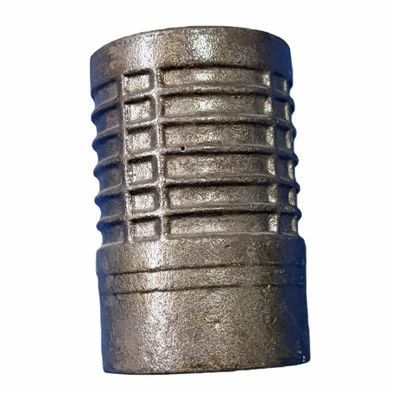
First, let’s ground this in basic metallurgy: grey iron is defined by its graphite microstructure, and graphite is pure carbon. When molten iron cools during casting, carbon doesn’t stay dissolved in the iron’s base matrix (which is mostly iron, plus small amounts of silicon, manganese, and trace elements like sulfur and phosphorus). Instead, under the right conditions, it forms flat, flaky graphite flakes scattered throughout the metal. That flake shape is the key to grey iron’s most beloved traits: it’s self-lubricating, so it works well for parts that rub against each other (like engine cylinder liners or gear housings), it dampens vibration way better than steel or ductile iron, which makes it ideal for heavy machinery frames, and it has excellent castability—meaning it flows easily into complex moulds without cracking, which cuts down on wasted material and production time. All of that comes back to carbon. If carbon levels are too low, graphite barely forms, and you end up with a hard, brittle white iron instead of the soft, machinable grey iron your customer needs. If carbon is too high, you get excess graphite that weakens the casting, leading to cracks or parts that can’t hold up under load. For our supplies, we dial in carbon to a tight range—usually 3.2% to 3.8% by weight—tailored to the specific application of each customer.
But carbon’s role goes way beyond just forming graphite. It also interacts with the iron’s other elements to shape the matrix that surrounds those graphite flakes. That matrix is what gives the casting its strength, hardness, and wear resistance. For example, when carbon is present at the optimal level, it works with silicon (another key element in grey iron) to promote the formation of a ferrite matrix—soft, ductile, perfect for cookware or agricultural parts that need to withstand impact. If we’re making an engine component that needs to handle high heat and stress, we adjust the cooling rate during casting so that carbon combines with iron and other elements to form a pearlite matrix instead. Pearlite is a fine, layered structure that’s much harder and stronger than ferrite, and that’s exactly what we use for cylinder blocks or brake drums. This isn’t a guesswork process; every time we melt a batch of iron for our supplies, we test the carbon content using a optical emission spectrometer before it goes into the mould. Even a 0.1% difference—about the weight of a single grain of rice—can throw off the entire matrix, so precision is non-negotiable.
Another critical part of carbon’s role is in machinability, a make-or-break factor for almost every casting we supply. Once a part is cast, it almost always needs to be machined—drilled, milled, or threaded to fit into a larger assembly. The graphite flakes in grey iron act like tiny built-in chip breakers: when a machining tool cuts into the metal, the flakes fracture, which breaks the metal’s shavings into small, easy-to-manage pieces instead of long, stringy chips that clog tools, ruin surface finishes, and increase machining time. But this only works if carbon is present in the right amount and the right flake shape. If carbon is too low, there’s not enough graphite to break those chips, and you end up with a casting that’s nearly impossible to machine without expensive tool damage or bad part quality. If carbon is too high, the graphite flakes become coarse, which makes the casting weaker but also gives it a rough, inconsistent machined surface that won’t fit tight tolerances. For our automotive customers, who need 0.01mm tolerances on engine parts, we adjust carbon to keep flake size consistent—usually grade 2 or 3 graphite, per standard ASTM specifications—so machining runs smoothly and every part meets their exact needs.
We also see carbon play a big role in reducing casting defects, which is a huge cost saver for our customers. When molten iron solidifies, it shrinks as it cools, which can cause voids or shrinkage cracks in the casting. Carbon, in the form of graphite, expands as it forms during cooling, and that expansion offsets the iron’s shrinkage. It’s a natural balancing act: without enough carbon, the expansion isn’t enough to fill the gaps, and you end up with internal porosity that makes the part weak or leaky (a disaster for pressure-bearing parts like pipe fittings or hydraulic components). Too much carbon, though, leads to excess expansion that can crack the mould, or so much graphite that the part has a low density and can’t hold torque on threaded holes. In our 18 years in this business, we’ve seen more customer rejections stem from incorrect carbon content than any other single factor—from a farmer who got a set of plow shares that cracked after the first season, to an automotive plant that had to scrap a batch of 500 engine blocks because of porosity leaks. That’s why we have a dedicated metallurgist on staff who oversees every melt, adjusts carbon levels based on our customer’s specifications, and runs post-casting tests to confirm graphite structure and carbon distribution.
It’s worth noting that carbon’s impact also depends on other trace elements in the iron, which is why we don’t just measure carbon in a vacuum. For example, sulfur (which is often present in scrap iron, our primary raw material for melting) reacts with carbon to form manganese sulfide, which can affect graphite flake shape. If sulfur is too high, it can cause graphite to form instead of the fine flakes we want, leading to inconsistent strength. That said, the base role of carbon remains the foundation—silicon adjusts how much carbon forms graphite, manganese controls hardness, but carbon is the one that turns raw molten iron into grey iron. For our ductile iron supplies (a close cousin of grey iron, with spherical graphite instead of flakes), carbon’s role is similar but shifted: we adjust it to 3.0% to 3.5% because spherical graphite is denser, so less is needed to get the same machinability and vibration damping, but that’s a topic for another day.
What I want our customers to understand is that carbon isn’t just a number on a spec sheet—it’s the reason their parts work. A customer might come to us saying “we need a 100mm cast iron bracket that supports 500kg,” and we start with carbon as our starting point. Too many casters cut corners on carbon, using scrap iron with inconsistent carbon levels to lower costs, but that leads to parts that fail early. As a supplier, we’ve built our reputation on prioritizing carbon precision, because that’s what makes a casting reliable. We work with every customer to test their application: if it’s a low-structure agricultural part, we can lean towards 3.4% carbon for better machinability; if it’s a high-stress pump component, we go to 3.7% carbon to offset shrinkage and add strength.
If you’re in the market for grey iron castings that hold up, whether for automotive, agriculture, construction, or industrial equipment, the first thing you should ask a supplier is how they control carbon content. It’s not just about the melt process—it’s about having the right equipment to test carbon, the metallurgical expertise to adjust it, and the commitment to not cut corners. We don’t just supply castings; we supply a product that’s been optimized with carbon at its core, so your parts work when you need them to.

If you’re looking for a reliable grey iron casting partner that prioritizes material science, tight carbon control, and consistent quality, reach out to us to discuss your specific project. We’ll walk you through how we adjust carbon for your application, share test results from past projects, and work with you to get the right part for your needs.
Alloy Cast Iron Parts References
ASTM A48/A48M – Standard Specification for Gray Iron Castings
Kaufmann, H. (2001). Fundamentals of Iron Casting. ASM International
Campbell, J. (2000). Castings Practice: The Ten Rules of Castings. Butterworth-Heinemann
American Foundry Society (AFS). (2018). Gray Iron Casting Handbook. AFS Press
Sangroove (Jiangsu) Machinery Co., Ltd.
Sangroove (Jiangsu) Machinery Co., Ltd. is one of the most professional grey iron casting manufacturers and suppliers in China, also supports customized service with low price. Please feel free to wholesale cheap grey iron casting in stock here from our factory. Also, pricelist is available.
Address: No. 789, Hengyang South Road, Jinhu County, Huai’an City, Jiangsu Province
E-mail: quote@sangroove.com
WebSite: https://www.sangoh.com/
