Hey everyone, it’s Jake here, and I’ve been working in the silo game for going on 12 years now—most days I’m at our shop wrenching on custom builds or on site helping farmers, grain elevators, and even chemical plant crews figure out why a silo’s holding fine one week and creaking the next. If you’ve ever stopped to think about what happens when the ground starts shaking, it’s not just a “cool earthquake fact”—it’s make-or-break for anyone relying on a silo to store anything from wheat to cement. Today I’m walking through the seismic stuff I learn every single year because let’s be real, old-school silos weren’t built for the big quakes that are getting more common these days, and cutting corners on seismic checks is how you end up with a huge mess (I’ve seen it). Silo
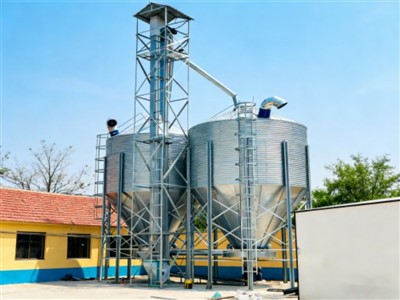
First off, let’s skip the stuffy engineering textbooks and talk about what a silo actually does structurally, because that’s the foundation of all seismic considerations. Most silos are either concrete or steel—steel’s our go-to for most custom builds these days, but concrete still dominates for big grain elevators. Steel silos are tall, thin cylinders with hopper bottoms at the base (that’s where you unload material), right? Concrete ones are usually stouter, but both have one thing in common: they’re designed to hold static mass, not to dance when the ground lurches. When an earthquake hits, the ground isn’t moving straight up and down—it’s shaking side to side, in waves, and if the silo’s not anchored right or not built to flex with those waves, that’s where damage starts.
Let’s start with site geology, because most folks overlook this before they even pick a silo. I can’t tell you how many times a customer says “we’ll just put it over here, it’s flat enough” and I have to pull them over to a USGS seismic hazard map (or whichever one applies to their country—we work all over North America and even a bit in Europe) and point out their site is sitting on loose fill or soft clay. Soil type changes how seismic energy travels, plain and simple. Loose sand or soft clay amplifies ground movement way more than solid bedrock does. Last year, we built three steel silos for a grain co-op in central Missouri that just got reclassified from a low-seismic zone to moderate—turns out they had a bunch of old, loose gravel fill under their site that the state geologists flagged a couple years back. If we’d ignored that and just built to the old code, those silos would’ve had a way higher chance of tipping in a M6 quake. That’s the first big rule: don’t pick a spot, pick a spot that’s stable for shaking. We always do a quick soil test check before we even draw up plans—no exceptions.
Next, the silo’s foundation. This is non-negotiable. I’ve seen a 90-foot steel silo crack right down its middle because the foundation was just a plain concrete slab on grade, no anchoring to the bedrock, for a farm in eastern Kansas that had a small M5.7 quake a few years back. The entire silo shifted a full 6 inches to the side, and the hopper bottom bent so bad they had to cut the whole thing down and rebuild it. For seismic zones, the foundation has to be designed to resist that horizontal shear force (that’s the side-to-side push) from the earthquake. For steel silos, we usually use deep anchor bolts that go 8 to 10 feet into the concrete foundation, not just bolt it to the top. For concrete silos, we tie the walls directly into the foundation mat with rebar that goes down 15 feet or more—no wimpy, short bolts here. Also, if the site has that loose fill I was talking about, we might add a pile foundation, either concrete or steel H-piles, to drive through the fill and lock into the firm soil below. That extra step adds a couple grand to the build, but trust me, it’s way cheaper than replacing a whole silo.
Then there’s the silo itself—its geometry and how it’s constructed. Taller silos have more sway, right? That’s basic physics, but you’d be surprised how many people try to cram more storage into a 100-foot steel silo that’s already 20 feet wide, like packing extra stuff into a shoe box and expecting it not to bend. When an earthquake hits, the top of the silo moves more than the base—so the ratio of height to diameter is a huge seismic factor. The general rule of thumb we follow is for steel silos, if height is more than 10 times the diameter, you need to add extra stiffeners around the walls, either horizontal or vertical, to keep it from buckling. Last year, we built a set of 110-foot steel silos for a feed mill in northern Oklahoma—they’re 9 feet wide, so height is over 12 times diameter. We added heavy-gauge horizontal stiffener rings every 10 feet up the wall, and even used thicker steel plate at the base to handle that side-to-side flex. For concrete silos, we use thicker walls at the base (called tapered walls) to give more strength where the stress is highest. I’ve also learned that empty silos vs. full silos act totally different in quakes. Empty silos have less mass, so they sway faster, which can lead to resonance—when the natural sway of the silo matches the frequency of the earthquake waves, and it gets amplified like a kid on a swing. Full silos have more mass, so they’re less likely to resonate, but the material inside pushes against the walls as the ground shakes, so the hopper bottom has to be strong enough to handle that internal pressure too. That’s why we always size the hopper base steel thicker for seismic zones—no skimping on that.
Wait, let’s talk about bracing. A lot of old silos don’t have any external bracing, just the walls. For seismic zones, especially areas with M5+ quakes, we add what’s called lateral bracing—usually steel angle iron or square tubing welded to the outside of the silo, connected to the foundation or to a secondary frame that’s anchored to the ground. I know it’s not the prettiest look, but it works. Last year we retrofitted a 1970s concrete silo for a grain elevator in Washington state that’s in a high-seismic zone—they’d owned it for 40 years and never had an issue, but after the 2019 M6.4 quake nearby, they noticed a 2-inch crack in the wall. We added external cross bracing and tied the wall into the foundation with new bolts, and now it’s good for another 50 years. Internal bracing is a thing too—for bigger silos, we add steel rods or frames inside that run from the hopper up to the top of the silo, to distribute the side-to-side force evenly across the wall instead of letting one spot take all the stress.
Then there’s the stuff people don’t think about: attachments and utilities. If you’ve got a silo, you’ve probably got a conveyor belt on top, a ladder leading up to the roof, maybe a grain level sensor, even a power line running to it. In an earthquake, those things can become projectiles or break off, damaging the silo or nearby property. Last time I was at a site after a small quake, I saw a metal grain level sensor that had ripped off the side of a silo and landed 20 feet away, just because it wasn’t bolted securely. So when we build a silo for seismic zones, we make sure every single attachment is rated for seismic loads—ladders are bolted every 2 feet, not just every 5, conveyor belts are mounted on brackets that can flex a little instead of being rigidly fixed, power lines are run through flexible conduits, not hard metal pipes that will snap when the silo sways. Even the roof hatch—if it’s not secured, it can pop open during a quake and let material spill out, or even fly off, which is a hazard to anyone nearby.
Let’s also touch on retrofits, because a lot of the silos out there still in use weren’t built to current seismic codes. We get calls all the time from farmers and plant managers who have an old silo they don’t want to replace, but want to make it safe for quakes. The retrofits aren’t one-size-fits-all—some just need new anchor bolts, some need external bracing, some need to add stiffeners to the walls. We did a retrofit last year for a small family farm in Iowa that had a 60-year-old concrete silo; they’d noticed it tilted a little after a minor quake, and didn’t want to risk it falling during the next big one. We pulled 12 new anchor bolts through the foundation, added horizontal stiffener rings around the wall, and adjusted the hopper bottom to straighten the tilt a quarter inch. Total cost was about 15% of what a new silo would’ve been, and it’s holding up great. The key with retrofits is doing a seismic analysis first—we use a basic software tool we’ve developed over the years (it’s not super fancy, just enough to get the numbers right) to calculate how much force the silo can handle, then pick the right fix.
Wait, I should also address a common myth: “Seismic stuff is just for California or Japan, right?” No way. The USGS updated their hazard maps in 2023 and showed that 40 states in the US now have at least a moderate seismic risk, up from like 25 a decade ago. I’ve been to sites in Texas, Arkansas, even New York that had small quakes, and a lot of those silos weren’t built to handle even that. The same goes for other parts of the world—parts of Europe, Australia, even parts of South America that used to have low seismic activity are seeing more quakes now. So if you’re in any area that’s had even one M4+ quake in the last 50 years, you should be checking your silo’s seismic readiness.
Now, let’s talk about what we do different here at our shop when building seismic-rated silos. First off, we don’t cut corners on materials. We use thicker steel plate for walls and hoppers in high-seismic zones, high-grade anchor bolts that are rated for shear, not just tension. We work with a local structural engineer who specializes in seismic design, but we don’t just follow their numbers—we add our own on-the-ground experience, because we’ve seen what works and what doesn’t in real life, not just on blueprints. We also test every silo before it leaves the shop, not just a visual check—we run a load test that simulates the side-to-side force of a M7 quake, so we know it’s not going to break when it arrives on site.
I can wrap this up with a story that really drove this home for me. A few years back, a farmer in central Illinois called us panicking—his farm had been hit by a M5.1 quake, and his 80-foot steel silo had tipped enough that he couldn’t unload his corn. He’d built it 10 years prior, using the cheapest contractor he could find, who just poured a slab on grade and bolted it with 4 short bolts. We went out, looked at it, and knew it was a total loss—because it wasn’t anchored to the bedrock, no bracing, and the foundation had shifted so bad the hopper bottom was bent. He ended up buying a new silo from us, and we explained every step we took differently: the soil test, deep anchor bolts, the stiffener rings, the bracing. He told me later he’d saved enough on just that one silo not tipping in the next quake to cover the extra cost we charged, plus the cost of losing the corn he would’ve had to throw away if it had broken. That’s the thing about seismic considerations—it’s not just code compliance, it’s protecting your livelihood.
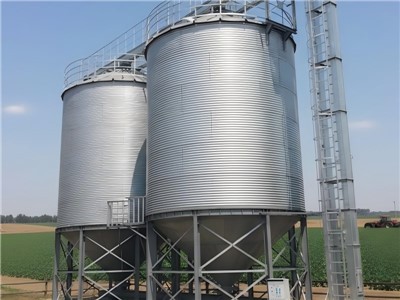
If you’re reading this and you’ve got a silo—whether it’s old or new, small farm or big elevator—don’t wait for a quake to check it. If you’re thinking about building a new silo, don’t just go with the cheapest quote. Hit us up to chat through your site, your needs, and what seismic steps make sense for you. We don’t do cookie-cutter builds—every silo we make is customized to the ground it’s sitting on, the material it’s holding, and the seismic risk it’s facing. We’ve got 12 years of field experience, seen the good, the bad, and the ugly, and we’ll make sure your silo is built to handle whatever the Earth throws at it.
Silo References:
- USGS Seismic Hazard Mapping Program: 2023 National Seismic Hazard Maps for the United States
- ASCE 7-22: Minimum Design Loads and Associated Criteria for Buildings and Other Structures
- Silo Seismic Design Guidelines, National Grain and Feed Association (NGFA)
- FEMA 450:NEHRP Recommended Seismic Provisions for New Buildings and Other Structures
- Steel Silo Design and Construction, Steel Plate Fabricators Association (SPFA)
Henan Oumu Intelligent Storage Equipment Co., Ltd.
As one of the most professional silo manufacturers and suppliers in China, we’re featured by quality products and good service. Please rest assured to buy customized silo made in China here from our factory. For quotation, contact us now.
Address: No. 681, Xinzhong Avenue, Hongqi District, Xinxiang City, Henan Province
E-mail: luna@oumu-silo.com
WebSite: https://www.oumu-silo.com/
